Cash Strategist 8-5-2026
Author
Published
8/3/2026
Corn yield debate has been loud – but why?
Aside from war risk discussions, which have been present in the corn market over the last month due to rising tensions both in the Middle East and in the Black Sea region, yield debate has been one of the more regular discussions amongst traders.
This isn’t necessarily a surprising development, as some sort of yield conversation usually occurs during August every year, but this year’s conversation seems to have already been rather contentious and the calendar has just barely flipped past July. So what’s the deal?
For one thing, an early planting campaign this spring has pushed much of the crop’s development ahead of what would be considered normal throughout the growing season. The USDA’s crop progress update last week showed the amount of crop silking and in the dough stage both well ahead of the five-year average, pushing the normal annual yield discussions forward a week or two.
Regional differences in weather could also be partially to blame, as a hot/dry pattern in the West has led producers to have a notably different view of the crop than those in the East, who outside of a week or two of warmer weather, have had a much cooler/wetter growing season.
But more importantly, it’s likely been the yield figure’s impact on this year’s balance sheet that has driven the bulk of the back-and-forth. After all, it doesn’t take a lot of crop loss to produce a significantly more bullish ending stocks figure.
The USDA currently has the U.S. national average corn yield pegged at 183 bushels per acre on roughly 87 million harvested acres, which produces a crop of 16 billion bushels and an ending stocks figure of 1.79 billion bushels.
On the bullish side, if yield is dropped just 2 bushels to 181 bushels per acre and all other demand items stay the same, ending stocks would fall to 1.6 billion bushels and stocks/use would drop below 10%. A further 1 bushel cut in yield to 180 bushels per acre would drop ending stocks to just above 1.5 billion bushels, with stocks/use falling to around 9%.
On the other side of the fence, if the better East outweighs the losses in the West and yields come in at 185 bushels per acre, ending stocks then jump to 1.96 billion bushels and stocks/use goes to 12%. A further increase to 186 bushels per acre pushes ending stocks back above 2 billion bushels, right back to the ballpark where 2025/26 ending stocks reside.
Yield debate gets loud almost every fall, but this year’s discussion looks to be particularly spirited.
corn strategy
Fundamentals:
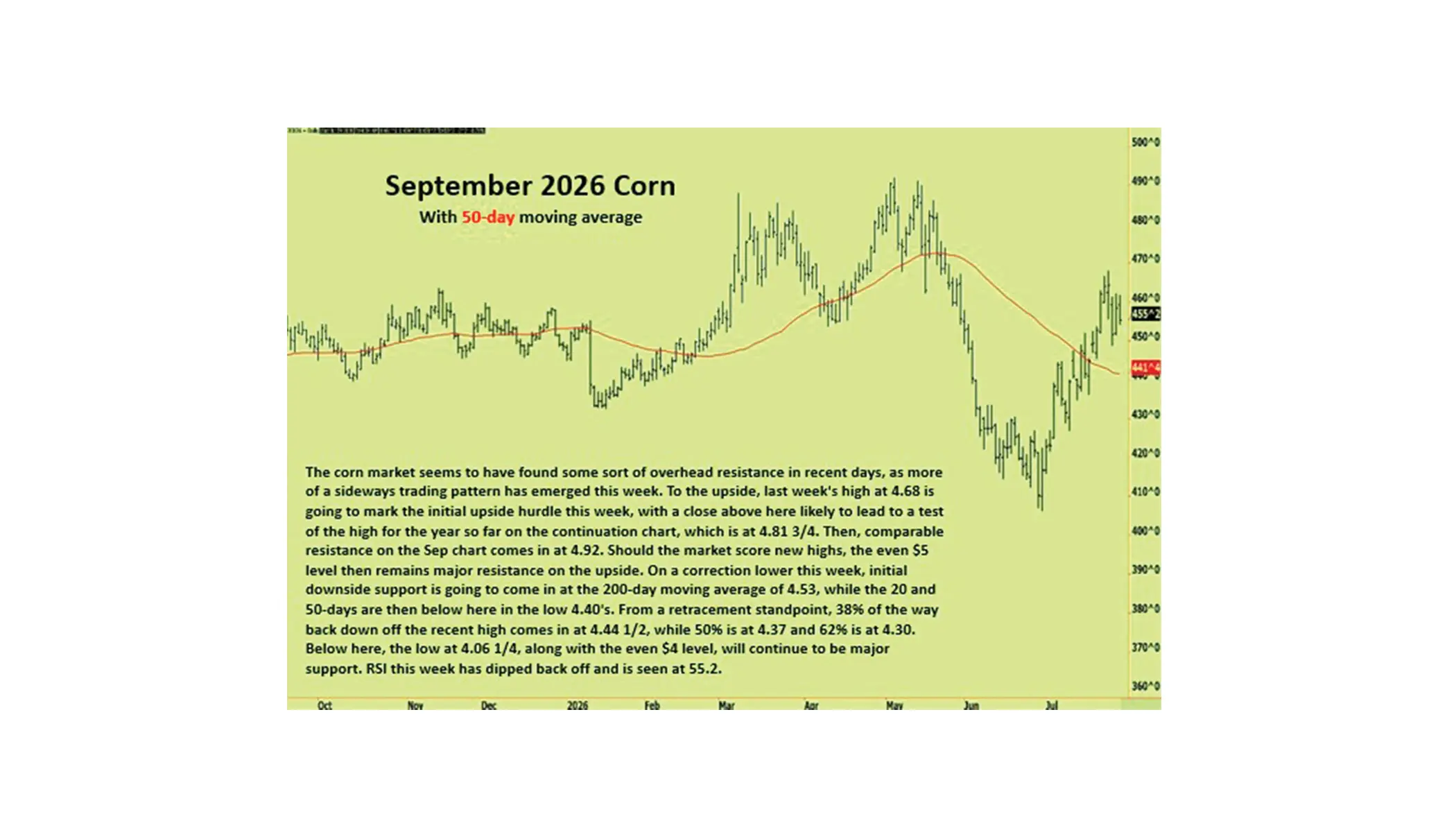
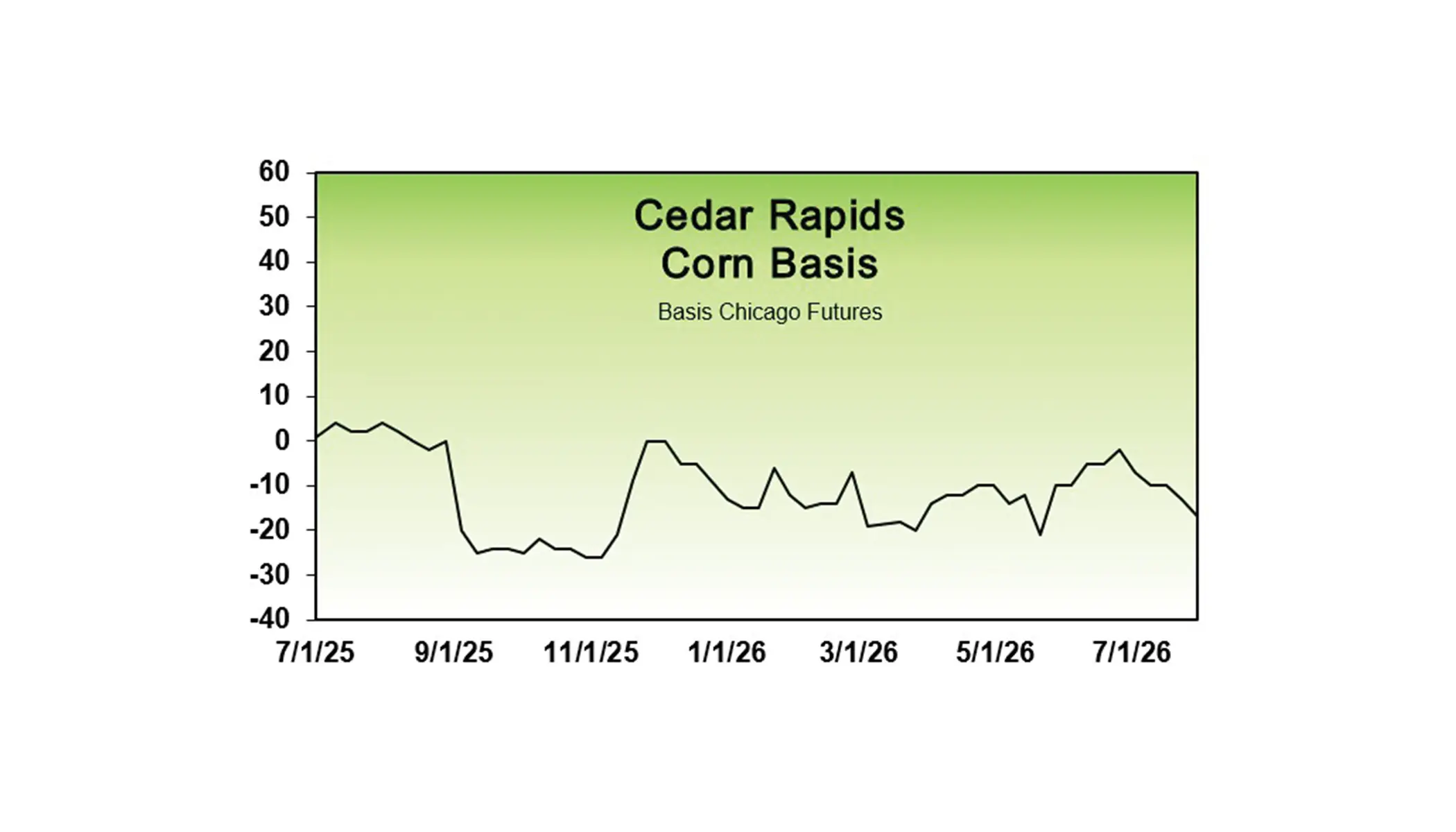
Fundamentals: News in the corn market has remained a rather volatile mix of crop fundamentals and geopolitics over the last week, with it becoming a near daily debate as to which is going to have the most impact on price. For crops, the U.S. yield discussion has been mostly a conversation of whether the cooler East offsets the warmer/drier West, while there is also debate ongoing regarding the extent of heat damage in Europe. And on the geopolitical side, neither the war in the Middle East nor the Black Sea region seem close to ending, which should keep risk premium present.
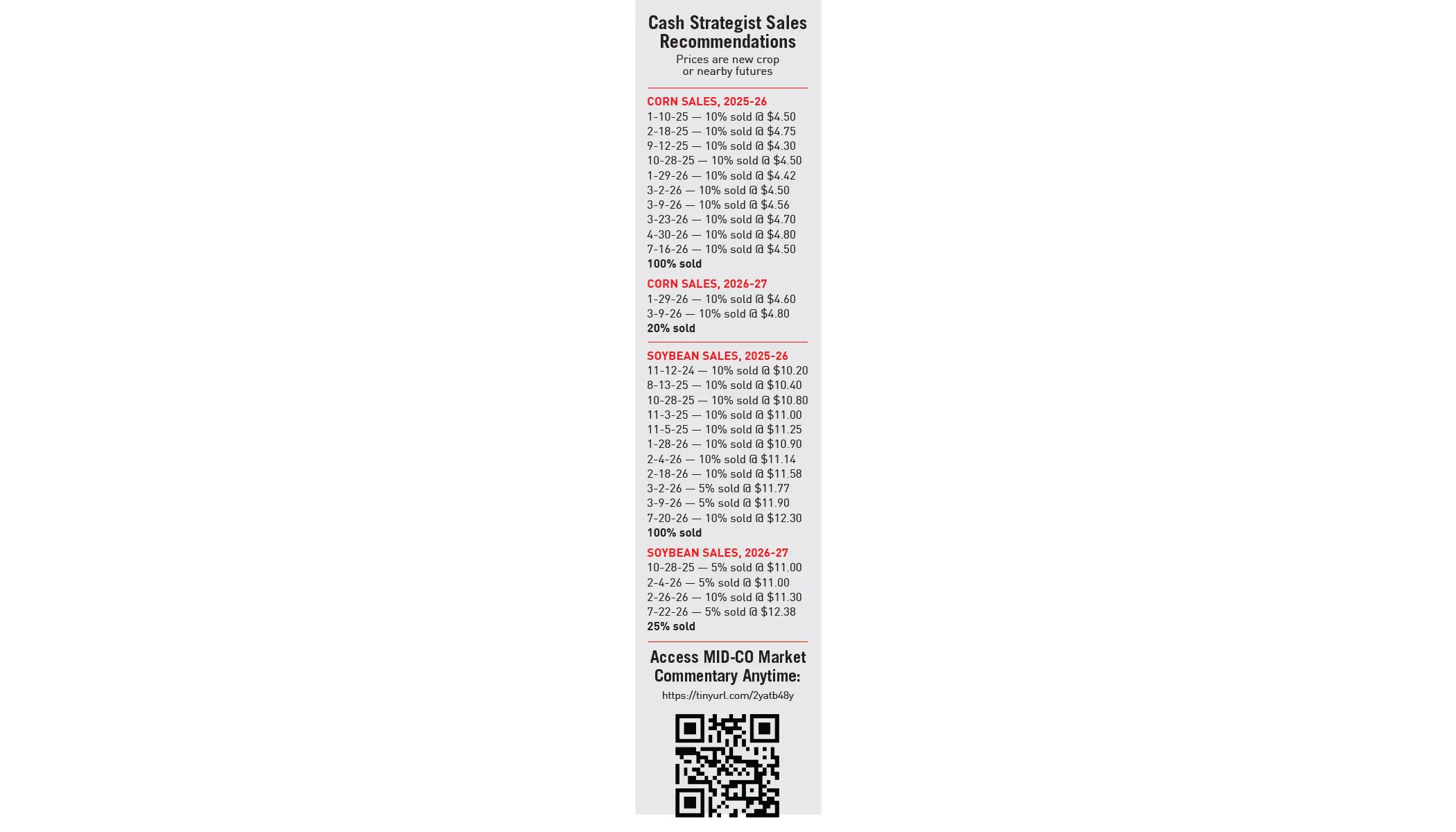
2025 CROP: 100% sold. September futures traded to $4.50 on July 16, which filled our last remaining 10% sales offer.
2026 CROP: Currently 20% sold. We recommend offering a 10% sale at $4.99 basis the December 2026 futures, which currently have around 20 cents of carry compared to September. If filled, this would bring total sales to 30%.
soybean strategy
Fundamentals:
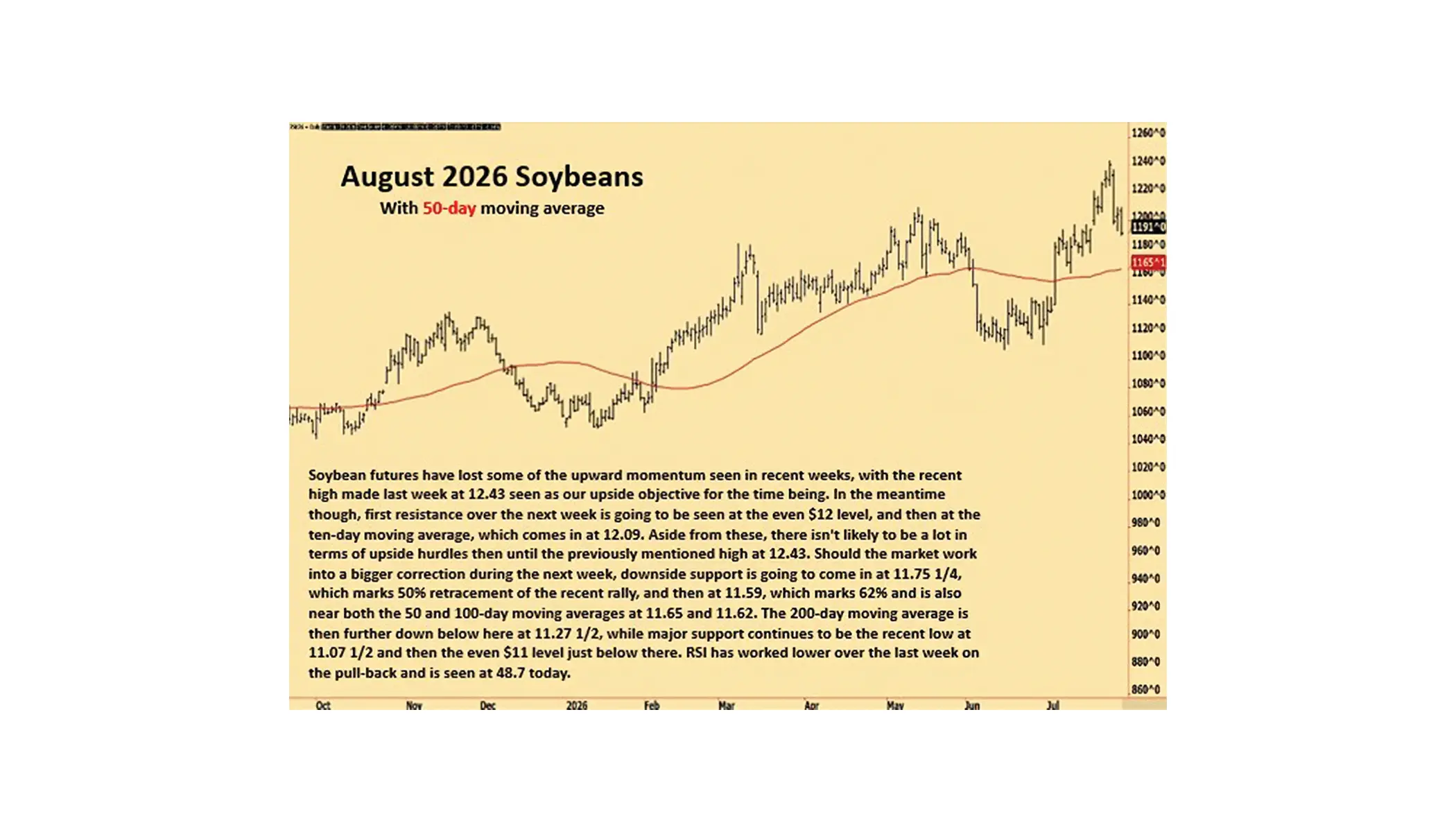
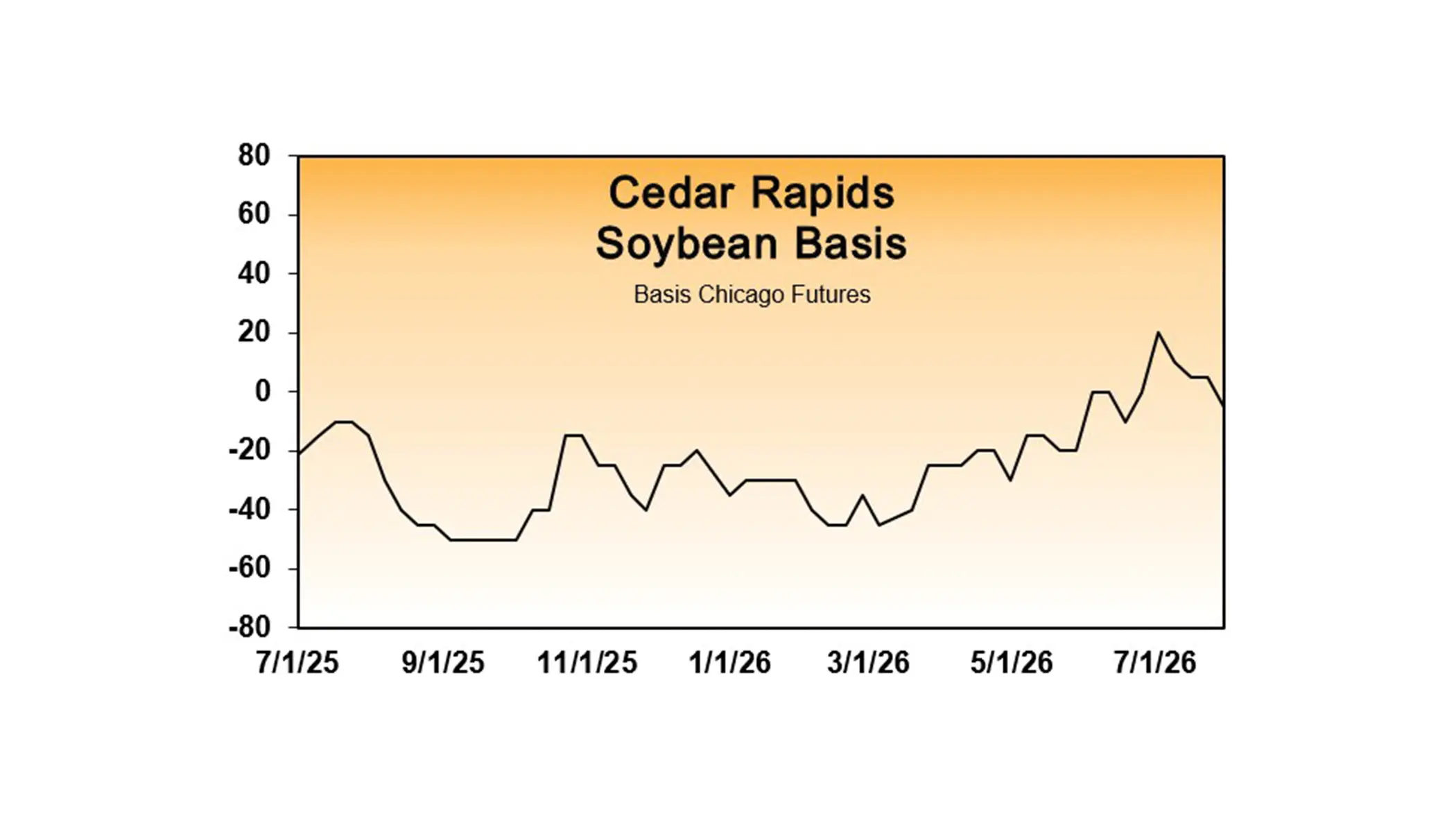
With crop focus just starting to move more to the forefront for soy traders, price discovery over the last week has largely remained a product of world energy values and Chinese demand, with little new details on either front. New AI-related tariffs from the Trump administration are said to have slowed Chinese bean buying slightly in recent days, while world energy trade has remained extremely volatile due to ongoing developments between the U.S. and Iran in the Middle East.
2025 CROP: 100% sold. August futures traded to $12.30 on July 20, which filled our last remaining 10% sales offer.
2026 CROP: Currently 25% sold. November soybeans traded to $12.38 on July 22, which filled our next 5% offer. We would now recommend offering an additional 5% sale at $12.90 basis on the November 2026 futures. If filled, this would bring total sales to 30%. November futures currently have around 15 cents of carry compared to August.
Want more news on this topic? Farm Bureau members may subscribe for a free email news service, featuring the farm and rural topics that interest them most!