Rebuilding the nutrient cycle
Author
Published
6/15/2026
Western Iowa business aims to build a more resilient, regenerative supply chain by converting organic wastes into stable, natural fertilizers.
For generations, food waste and other organic byproducts cycled naturally across Iowa farms. However, over time, increasing volumes of organic waste streams became underutilized or lost through food systems instead of being recovered and returned to the soil.
Natural Fertilizer Services, a western Iowa company, believes that challenge has created an opportunity.
Woodbine entrepreneur Abe Sandquist has spent nearly two decades working with livestock farmers, food processors and agricultural partners to recover nutrient resources that might otherwise be lost, building a business focused on recycling organic byproducts back into productive farmland.
Now Sandquist is taking that mission a step further by constructing the first WINR (Waste Into Nutrient Recovery) Center in Woodbine, a facility designed to serve as nutrient recovery infrastructure for agriculture by collecting livestock manure, food processing byproducts, yard waste and other organic residuals and then converting them into compost-based soil amendments and fertilizer products for nearby farm fields.
“Our business model is to work with livestock producers, food manufacturers and communities to complete the nutrient cycle, capture underutilized nutrient resources and bring them back to the farm,” Sandquist explained.
He believes that the U.S often lacks the infrastructure to efficiently recover and reuse large volumes of valuable nutrients.
“Why are we so dependent on outside fertilizer sources when we already have a nutrient recycling opportunity right here in the United States?” he asked.
Rather than manufacturing more fertilizer, Sandquist said WINR centers are designed to create a new pathway for agriculture, food processors and communities to recover nutrients locally while supporting farmers with additional tools for long-term soil productivity.
The resulting products complement traditional fertility programs by adding organic matter, biology and recycled nutrients back into the system while also improving soil structure, moisture retention and resilience.
“Agriculture has become highly dependent on supplemental fertility, but our soils also need organic matter, biology and better nutrient cycling,” Sandquist said. “WINR is about restoring balance, improving long-term soil productivity and giving farmers another tool for the future.”
Sandquist believes this model can help strengthen domestic fertilizer independence, improve drought resilience, support carbon retention and create new economic opportunities in rural communities.
Each WINR facility is designed to process tens of thousands of tons of organic material annually, creating value from underutilized resources while supporting thousands of acres of crop production with recycled nutrients.
Years in the making
Sandquist’s path began in the mid-2000s while working as a soil conservationist with the U.S. Department of Agriculture’s Natural Resources Conservation Service (NRCS), where he helped livestock farmers better understand manure as a nutrient asset.
Conversations with farmers led him to consider solutions for manure management plans that were constrained by land availability or nutrient management limits.
“That’s when I realized there needed to be a better business model to move nutrients where they’re needed instead of letting them become a burden,” he recalled.
That led Sandquist to launch Natural Fertilizer Services, initially brokering manure between livestock and crop farmers before expanding into broader nutrient recovery systems.
“I realized that almost anything organic can be a nutrient resource if you build the right system to recover it,” he said. “WINR is the next evolution of that idea.”
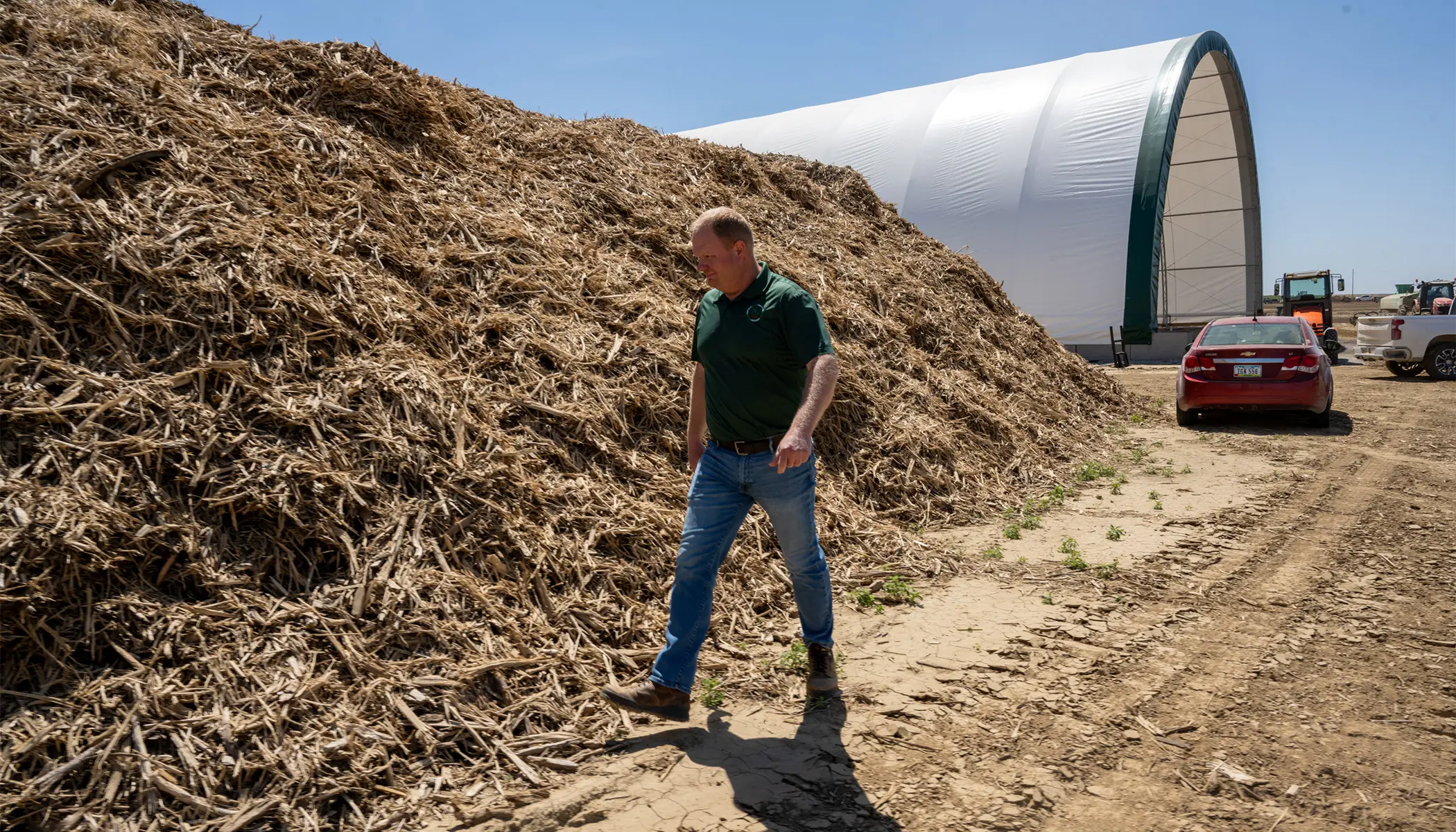
PICTURED ABOVE: Natural Fertilizer Services provides testing, precision application and compliance expertise to help turn farm and food waste into valuable nutrients. PHOTO / CONRAD SCHMIDT
Building nutrient recovery infrastructure
Over time, the company expanded beyond manure into broader organic nutrient management solutions that create value for farmers, food processors and other industries while reducing disposal challenges.
“Every day, agriculture and food processing create valuable byproducts that still contain nutrients, carbon and biological value,” Sandquist explained. “The challenge is building the infrastructure to recover those resources efficiently and return them to productive use.”
WINR centers are designed to process these materials through engineered composting systems using aerated static pile technology. Organic materials are analyzed, balanced for carbon, nitrogen and moisture, and biologically processed under carefully monitored conditions.
“We analyze the materials, understand their nutrient profile, combine them with the right carbon sources and create the right biological environment,” Sandquist said. “Then we use controlled airflow and microbial activity to stabilize and transform those resources into valuable agricultural products.”
Once processed, materials are screened, refined and marketed back to farmers as soil amendments and nutrient products, building a more resilient, regenerative supply chain.
“We’re harvesting nutrient value that already exists,” Sandquist said. “Instead of viewing these materials as disposal problems, we see them as resources that can improve farms, strengthen soils and support agriculture.”
Completing the cycle
Sandquist is currently constructing the first WINR facility in Woodbine, with operations expected to begin by late summer. The company has grown from a one-person operation into a team of more than 30 employees over the past two decades.
Future plans include expansion to additional sites, including Audubon and other regions where nutrient recovery infrastructure can help agriculture and communities better manage organic resources.
“Our goal is to prove this model and create systems that can be replicated anywhere nutrient recovery is needed,” Sandquist said.
“This is bigger than one community. These nutrient challenges exist across the country, and so does the opportunity.”
For Sandquist, the mission remains rooted in one central idea.
“Our business model is to complete the nutrient cycle, to capture valuable nutrient resources, recover them responsibly and return them to the soil where they can help feed the next generation.”
Want more news on this topic? Farm Bureau members may subscribe for a free email news service, featuring the farm and rural topics that interest them most!