Iowa Farm Bureau 2026 Economic Summit to explore ag trade
Author
Published
4/13/2026
Former U.S. Trade Representative Bob Lighthizer will keynote July 17 event examining tariffs and trade policies.
With global markets in flux and geopolitical tensions reshaping demand for U.S. agricultural commodities, Iowa Farm Bureau is bringing together internationally renowned trade and economic experts this summer to examine how farmers can position themselves for success in an uncertain environment.
Iowa Farm Bureau’s 2026 Economic Summit, “Trade Crossroads: Forces Shaping the Future of Ag,” will unpack the full spectrum of perspectives on agricultural trade, including how evolving tariffs, trade policies and global pressures are affecting farmers and agribusinesses at the farm level. The one-day conference will take place July 17 at the FFA Enrichment Center in Ankeny.
“U.S. ag trade stands at a pivotal moment, and the decisions being made today will shape the future of agriculture for years to come,” says Christopher Pudenz, Iowa Farm Bureau economics and research manager. “For Iowa farmers and agribusiness leaders, the stakes here are very high. Understanding where we’ve been — and where ag trade is heading — is essential to protecting profitability and securing new opportunities in a rapidly changing global marketplace.
“You won’t agree with everything you hear at this summit, and that’s by design. We intentionally arranged speakers who have differing viewpoints about the path forward for U.S. trade policy to provide as many perspectives on trade as possible.”
Fireside chat with former USTR
The morning keynote will feature a fireside chat between former U.S. Trade Representative (USTR) Bob Lighthizer and Iowa Farm Bureau President Brent Johnson about fair trade and the Trump trade policy agenda.
Lighthizer served as the 18th U.S. Trade Representative (USTR) during the first Trump administration from 2017 to 2021, spearheading U.S. negotiation efforts for several historic trade agreements including the U.S.-Mexico-Canada Agreement (USMCA) and the U.S.-China Phase One Economic and Trade Agreement.
“Ambassador Lighthizer was the driving force behind the most consequential trade negotiations of the past decade,” Pudenz said. “He wrote the tariff playbook for the first Trump administration, and we’re still operating under that playbook.
“We’re hoping to have a candid conversation with him about tariffs and what they mean for agriculture. What is the end game of this approach to trade policy, and how do we know when we’ve arrived?”
In addition to USMCA and the China Phase One deal, Lighthizer reached additional agreements with South Korea and Japan that expanded U.S. trade opportunities and established a groundbreaking paradigm for digital trade. He also brought attention to systemic issues and outdated rules at the World Trade Organization (WTO), pressuring the WTO’s activist Appellate Body and working with U.S. trade partners on wider reforms.
National Milk Producers CEO Gregg Doud will deliver the afternoon keynote, offering a forward-looking view of where U.S. trade efforts should be focused. Doud, who served as chief agricultural negotiator for the Office of the USTR under Lighthizer, will highlight the growing world demand for animal protein and how the U.S. is well-positioned to meet that demand.
Other presenters include free trade economist Dr. Sam Gregg of the American Institute for Economic Research; beef and pork trade expert Erin Borror with U.S. Meat Export Federation; and grains market commentator Susan Stroud of No Bull Agriculture.
Leaders from ISU’s Center for Agricultural and Rural Development (CARD) will unveil a new joint study in partnership with Iowa Farm Bureau and the Iowa Bankers Association regarding the health of the Iowa agricultural economy, with an emphasis on trade, and what that means for ag financial conditions and future farm profitability.
Additionally, attendees will hear directly from Iowa companies that are actively exporting agricultural and ag-related products, offering practical insights into navigating international markets along with the challenges and opportunities for small- and medium-sized Iowa businesses.
“This summit will blend policy insight with real-world experience,” Pudenz said. “These are folks who are plugged in to the ongoing trade policy discussions. Attendees will gain a clear, practical understanding of how global trade forces are shaping opportunities for Iowa agriculture.”
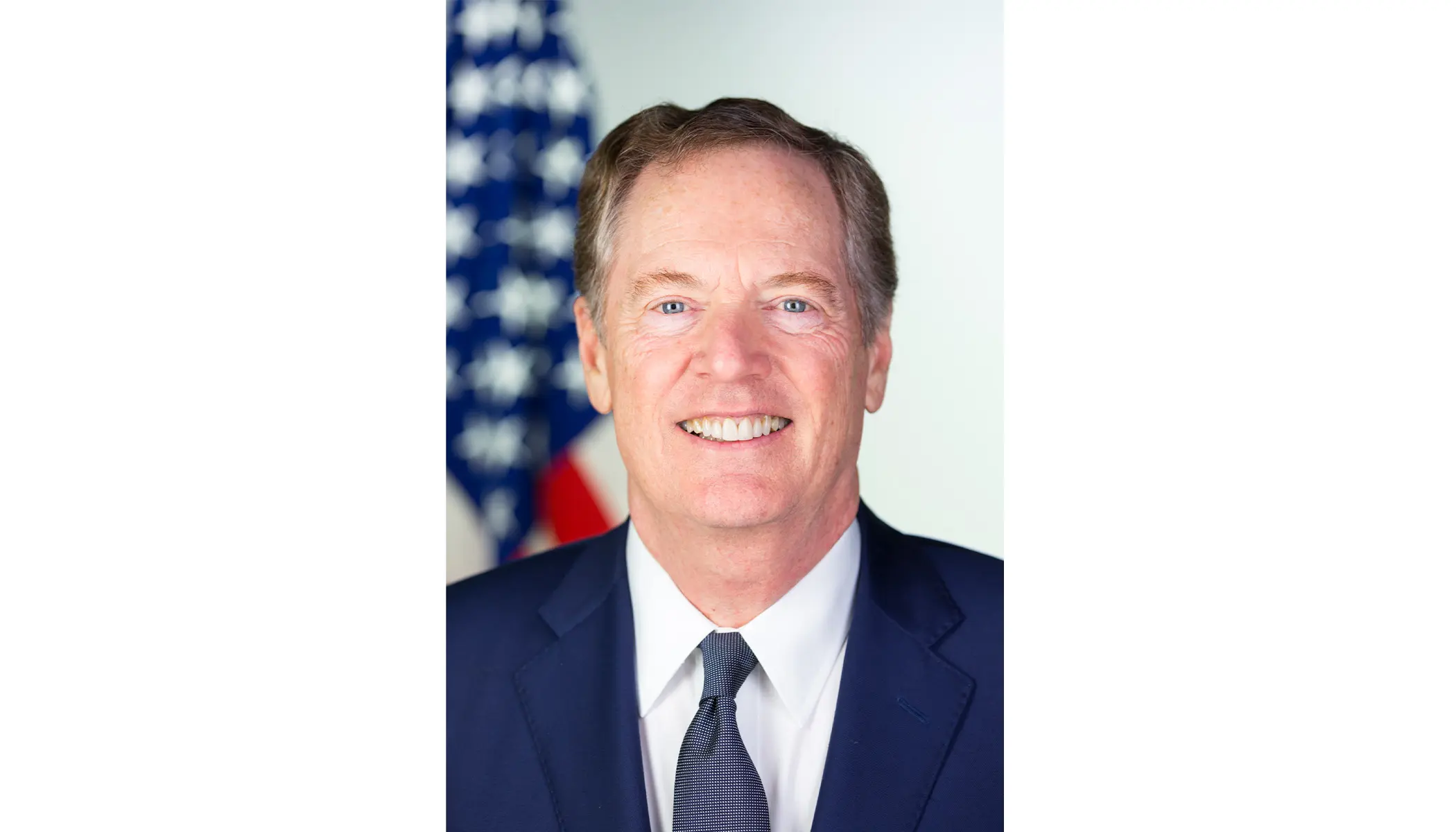
PICTURED ABOVE: Lighthizer
An economic driver of Iowa’s economy
Trade is a major driver of farm profitability and Iowa’s overall economy with exports totaling $13.7 billion in 2024, Pudenz notes.
“Iowa is the second largest state for ag exports in the U.S., and the ripple effects reach every farmer and every rural community,” he said. “From an ag economics perspective, trade is absolutely essential for profitability because of how productive Iowa’s farmers are. We rank first in hogs and pigs, first in corn production, second in soybean production and fourth in cattle on feed.”
Trade adds tremendous value for each of those markets, lifting prices at the farm level, Pudenz says.
“For example, the U.S. exports 30% of its pork production and 40% to 50% of its soybean production. In 2025, beef exports added nearly $400 per head in the U.S.,” he notes.
“Given all the policy changes related to trade in the past 10 years, and especially in the past 12 months, we decided that if we were going to focus on one particular aspect of farm profitability at this year’s economic summit, it had to be trade.”
Registration for IFBF 2026 Economic Summit is $25 for Farm Bureau members and $200 for non-Farm Bureau members through May 31. After May 31, the price increases to $50 for Farm Bureau members and $400 for non-Farm Bureau members.
Registration includes a complimentary evening welcome and networking reception for attendees on July 16. A limited number of hotel rooms are available at a discounted conference rate at Tru By Hilton and Courtyard by Marriott in Ankeny until July 3.
For a complete agenda, visit www.iowafarmbureau.com/news/economic-summit.
Want more news on this topic? Farm Bureau members may subscribe for a free email news service, featuring the farm and rural topics that interest them most!