July Cattle Inventory Report May Signal Herd Stabilization
Author
Published
7/28/2026
U.S. Cattle Herd
The USDA released its semi-annual estimate of July 1st cattle inventories on July 24th, 2026. Total cattle inventory showed the first year-to-year increase since 2018, rising by 200,000 head from last year. Inventory of cows and heifers that have calved was unchanged at 38.1 million heads. Beef cows continue to account for 75% of cow inventory despite falling by 0.7% to nearly 28.5 million heads. Milk cow inventory increased by 200,000 heads to almost 9.7 million heads. Beef replacement heifers increased by 2.7% to 3.8 million heads from July 2025. Cattle on feed rose by 200,000 heads to 13.2 million heads (Figure 1).
The increase in total cattle inventory marks a potential turning point after several years of herd contraction. While the beef cow herd remains historically small, growth in replacement heifers and cattle on feed suggests producers may be beginning the early stages of herd rebuilding as forage conditions and profitability improve.
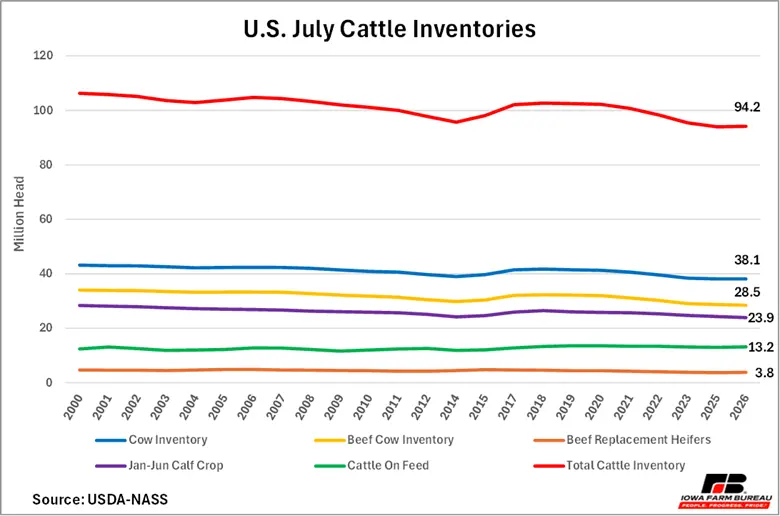
Figure 1. U.S. July Cattle Inventories
The U.S. calf crop from January-June decreased by 1.6% to 23.9 million heads from the semi-annual estimate in 2025. The estimated calf crop for the second half of 2026 is expected to decrease by 95,000 heads to 8.6 million heads. This results in the estimated annual calf crop for 2026 falling 1.5% to 32.5 million heads (Figure 2).
Although total cattle inventories increased, the smaller calf crop indicates that supplies of feeder cattle are likely to remain relatively tight in the near term. Any expansion of the beef herd is expected to occur gradually before translating into larger calf crops.
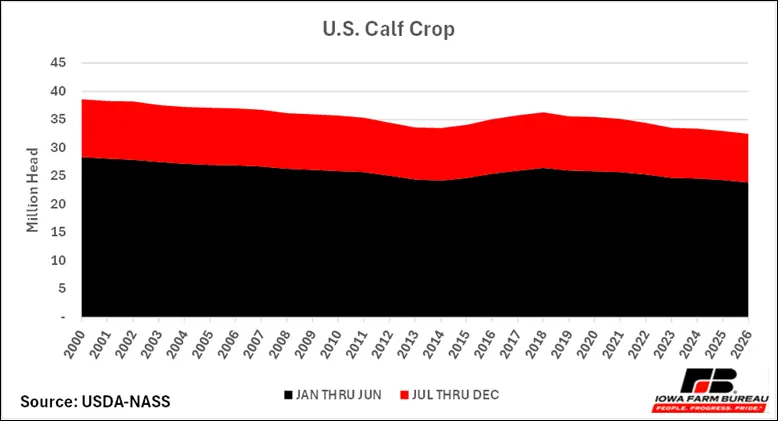
Figure 2. U.S. Calf Crop
U.S. cattle slaughter in the first half of 2026 fell by 7.9% to approximately 13.8 million head, resulting in beef production decreasing by 5.3% to 12.3 billion pounds (Figure 3). Reduced slaughter reflects the smaller available supply of market-ready cattle following several years of herd liquidation and cattle remaining on-feed for longer periods of time. Lower slaughter volumes have contributed to tighter beef supplies and continued support for cattle prices although the longer feeding times have resulted in more beef per animal which is one reason beef production is down less than slaughter. Slaughter volume is likely to continue to decrease if heifer retention and reduced cow slaughter are seen in the upcoming months and that will likely continue the downward trend in beef consumption.
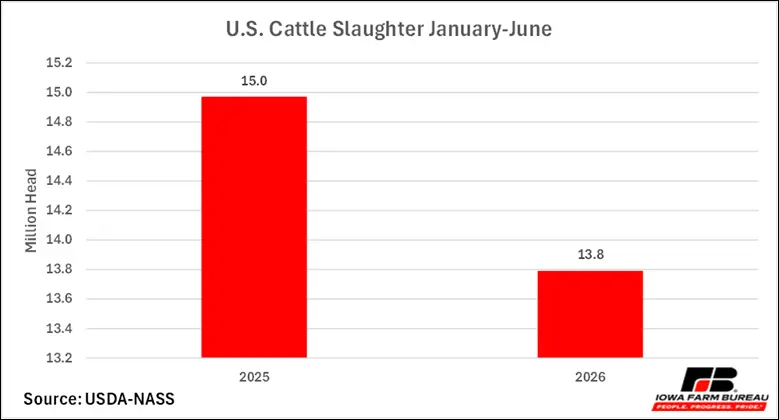
Figure 3. U.S. Cattle Slaughter January-June[DM1] [AR2]
Pests
The first reported case of New World Screwworm in the United States occurred on June 3rd, 2026. There have been no new confirmed cases in cattle since July 17th, with all cases occurring in Texas. While the number of confirmed cases remains limited, producers continue to monitor the situation closely due to the potential animal health and trade implications associated with the pest. Ongoing surveillance and containment efforts remain critical to preventing further spread.
Overall, the July cattle inventory report suggests the U.S. cattle industry may be transitioning away from the prolonged period of herd liquidation that began several years ago. However, declining calf crops and lower slaughter indicate that cattle supplies remain relatively tight, meaning any significant expansion in beef production is likely to occur gradually.
Want more news on this topic? Farm Bureau members may subscribe for a free email news service, featuring the farm and rural topics that interest them most!