Emergency CRP Haying and Grazing Information
Author
Published
6/18/2026
There is undoubtedly major drought concerns across parts of the United States, particularly in the west where snowfall and rainfall have been scarce. The Conservation Reserve Program (CRP) allows eligible acres to be used for livestock during periods of drought, wildfires, or other qualifying emergency scenarios. For haying, producers are permitted to do one cutting and authorized to sell the hay. Emergency haying and grazing is subject to a specified timeframe and can end early if conditions approve.
As of June 12th, 2026, eligible counties for CRP emergency haying and grazing are illustrated in Figure 1. Much of the western region of the United States is currently approved for emergency haying and grazing. Approval is done on a county-by-county basis. In some cases, entire states like Wyoming, Utah, and New Mexico have all counties currently eligible for emergency haying and grazing.
Notably, with the exception of New Mexico, these states have relatively low acreage enrolled in CRP. In 2025, Wyoming had 585,045 acres; Utah had 162,053 acres; and New Mexico had 1.2 million acres. Prominent beef cow producing states that have counties eligible for emergency haying and grazing, like Texas and Oklahoma, have 2.19 million and 715,479 acres enrolled in CRP, respectively.
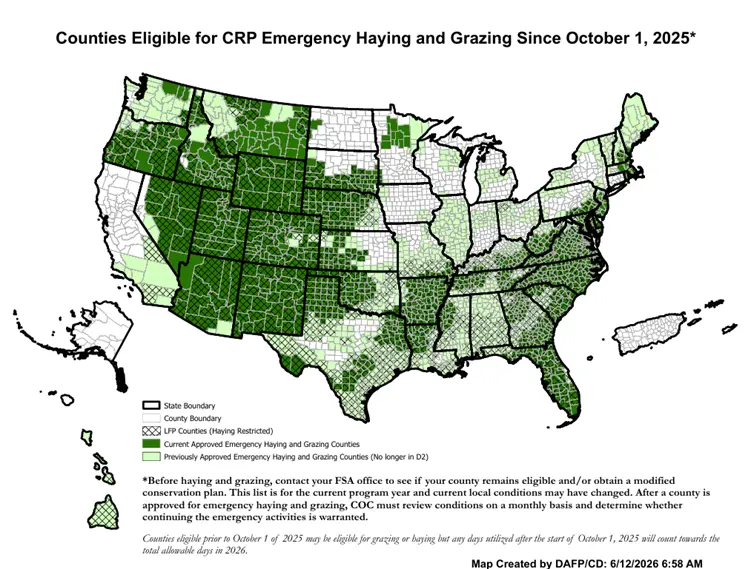
Figure 1. Map of Counties Eligible for Emergency Haying and Grazing as of June 12th, 2026
A comparison of current counties eligible for emergency haying and grazing and the current U.S. Drought Monitor tells the same story. Most instances of extreme and exceptional drought are located in the western region of the United States. Cases of severe and moderate drought are widespread across the west and into the southeast regions of the country (see Figure 2).
As illustrated in Figure 3, the beef cow inventories are not predominantly concentrated to the same regions currently eligible for emergency haying and grazing. Texas, for example, has the highest number of beef cows yet eligible acres are primarily located in the panhandle and in the upper east portion of the state. In other cases, as seen in Nebraska and Oklahoma, a large portion of counties are currently eligible for CRP emergency haying and grazing. For states like Oklahoma, eligible acres and areas of extreme and exceptional drought are located in the panhandle and into west-central region of the state. Oklahoma ranks as the second largest beef cow producer with over 1.4 million head.
The U.S. Drought Monitor as of June 9th, 2026, indicates that approximately 54% of the U.S. cattle inventory is within an area experiencing drought.
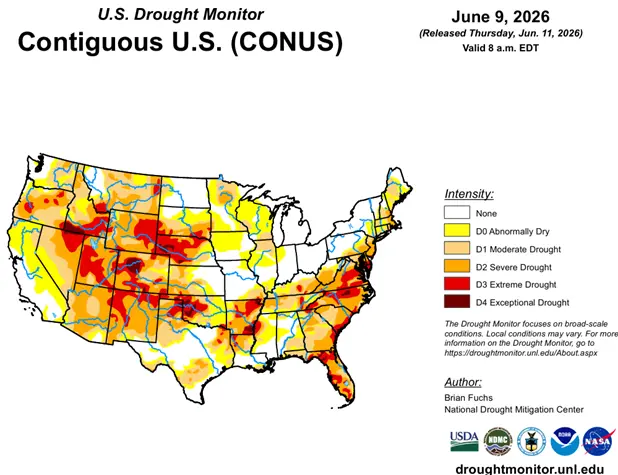
Figure 2. Current U.S. Drought Monitor
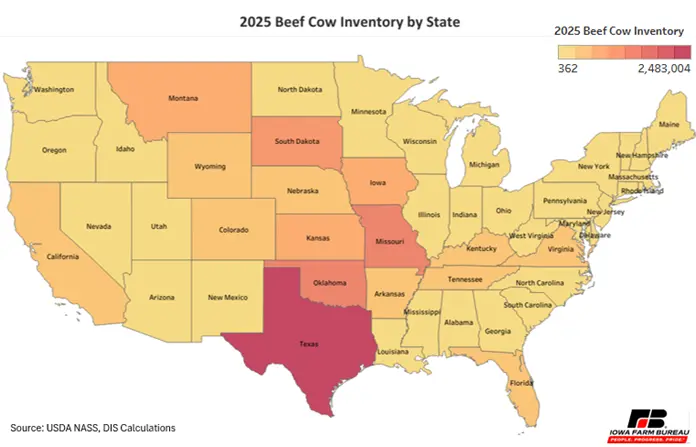
Figure 3. 2025 Beef Cow Inventory by State
As we progress through summer and into warmer months, we can expect to see some possible changes to counties eligible for emergency haying and grazing, but also with beef cow numbers across the United States. The June drought outlook indicates that drought is expected to persist throughout much of the west and across a band of the upper southeast (see Figure 4). For predominant beef cow producing areas like the Texas Panhandle and Oklahoma Panhandle, drought is expected to slightly improve.
For Iowa, the outlook also indicates that a drought development is likely on the eastern side of the state. Currently, there are no eligible counties for emergency haying and grazing in Iowa, but the northwest region is considered abnormally dry.
If conditions worsen and county forage production loss exceeds 40%, we can anticipate the approval of additional acres for emergency haying and grazing. This comes at a pivotal time for the U.S. cattle industry as herd contraction persists. Forage loss and drought continue to be a significant contributors to the declining trend in beef cattle as producers are driven to sell off cows by economic pressures and lack of local feed supplies.
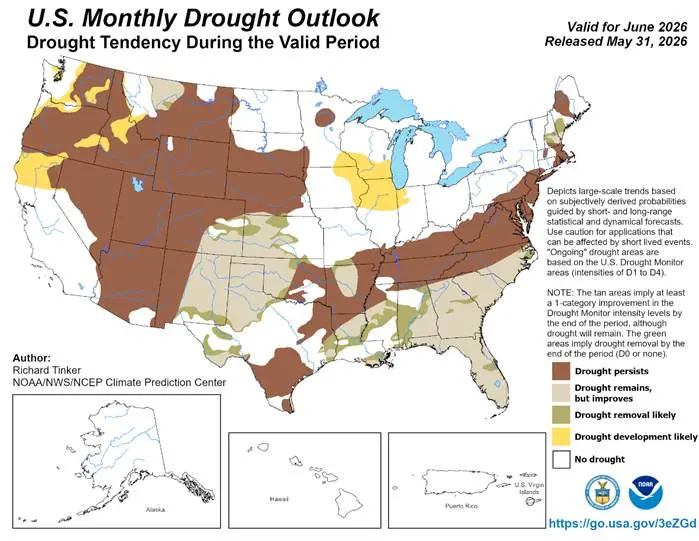
Figure 4. June Drought Outlook
Want more news on this topic? Farm Bureau members may subscribe for a free email news service, featuring the farm and rural topics that interest them most!