Building Agriculture’s Future
Author
Published
10/19/2026
Like many of today’s young farmers, Nicole Cohoon and her husband, Tim, are balancing full-time careers off the farm while tending to farm-related duties on nights and weekends.
They farm with Nicole’s dad, Gary Langbein, and her brothers, Brandon and Joe, raising corn, soybeans and alfalfa along with a cow-calf herd in Sac County.
“My brothers work off the farm too, so we like to joke that we’re the weekend warriors,” said Nicole. “You can get a lot done in 48 hours.”
Nicole is serving as chair of the Iowa Farm Bureau’s Young Farmer Advisory Committee for the 2026-27 program year and Tim is public relations co-chair.
Off the farm, Nicole works as a financial officer for Farm Credit Services of America in Storm Lake, giving her unique insight into the economic pressures facing farmers today. Tim operates his own branding and digital marketing agency, BreakThru 360 Marketing. Together, they also own Core Aquatics 360, a business focused on water safety and lifesaving skills.
Balancing those responsibilities with farming requires careful coordination, a willingness to work hard and plenty of communication among family members — the kind of life lessons Nicole learned growing up on the farm and participating in 4-H and FFA.
“I got a lot of good, real-world experience through 4-H. We farrow-to-finished our own hogs, bucket bottle calf projects, things like that,” she said. “And then just helping around the farm, whether it’s fixing fence or helping in the field. You definitely learn teamwork and a good work ethic.”
Overcoming the Barriers to Farming
The high cost of land, machinery, seed and other inputs remains one of the biggest challenges facing young farmers entering agriculture, Nicole said. Young farmers with limited resources often find themselves competing against larger, more established operations when land becomes available, she noted.
“By far, the biggest struggle for a young farmer today is just the amount of capital that it takes to get started, especially if you don’t come from an established ag background,” she said. “Whether that’s machinery and equipment, seed, land costs … things like that just make it difficult.”
Those challenges make careful financial management essential. With machinery, fertilizer, diesel and other input costs weighing on farm budgets, she emphasizes the importance of understanding your operation’s finances and making informed decisions.
“Just managing your costs well, knowing your operation really well, knowing what your breakeven is, and just learning to balance that as best as you can,” she said.
Diversification can also help farmers navigate financial hurdles. For some operations, that may mean exploring new enterprises or alternative sources of income. For others, off-farm employment provides additional cash flow and helps support the farm.
Despite the financial pressures and demands on farmers’ time, Nicole sees plenty of reasons for young people to pursue opportunities in agriculture. Technology continues to evolve, creating new possibilities for producers and changing the way farms operate.
“Agriculture’s something that’s always changing. There’s always new technology,” she said. “So I think there’s always something to look forward to.”
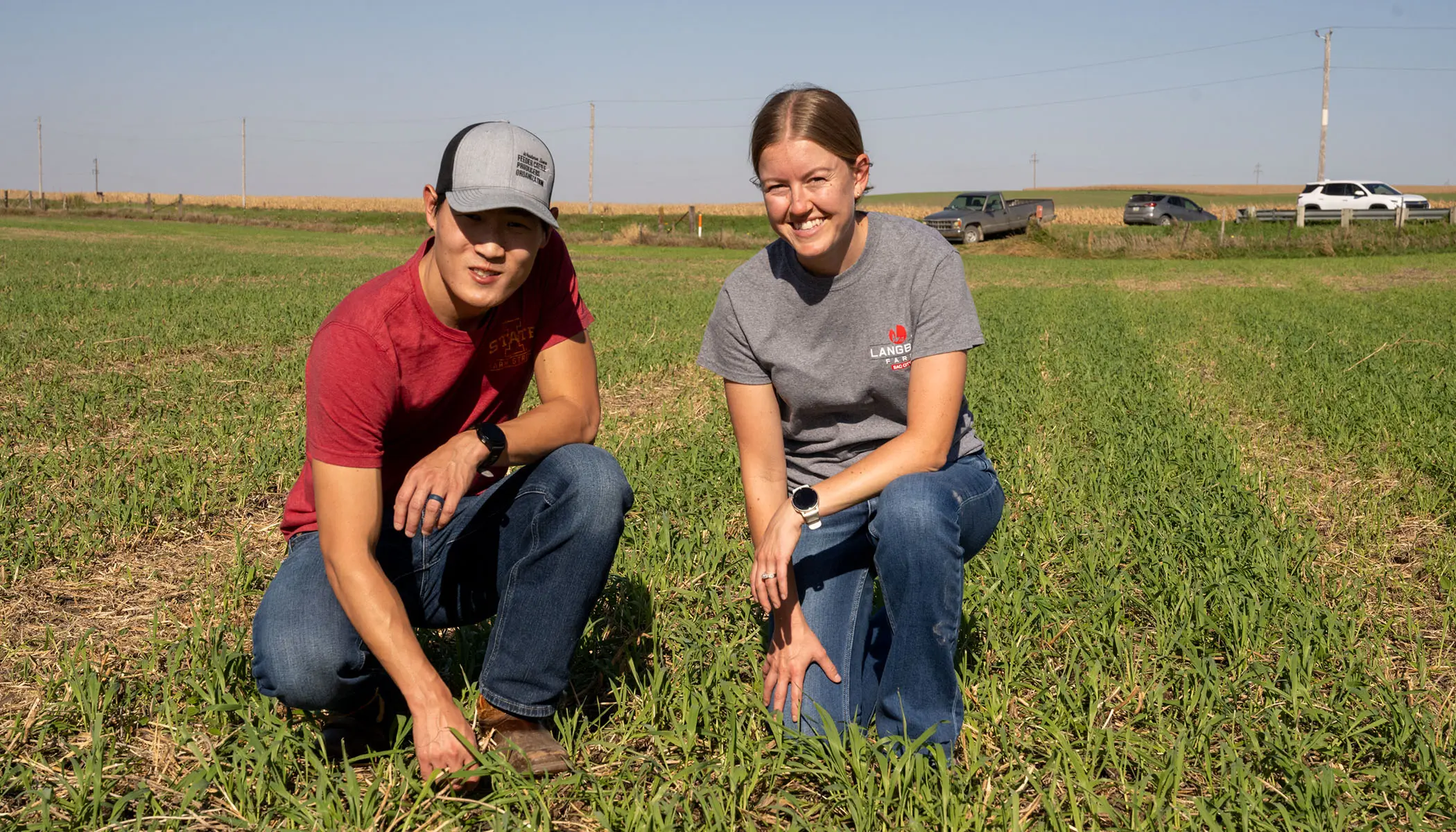
PICTURED ABOVE: Tim and Nicole Cohoon check out a field of oat cover crops, which will be grazed by cattle this fall. The family has about 245 acres of cover crops along with other conservation practices, including no-till, waterways and terraces on their Sac County farm. PHOTO / CONRAD SCHMIDT
Staying Connected
Staying connected to her rural community and carrying on her family’s legacy makes the long hours and hard work worthwhile, Nicole said.
She and Tim met at Morningside University and moved back to Sac County after graduation. While Tim is a Wyoming native, he wasn’t a stranger to agriculture with his dad working as an engineer for the Natural Resources Conservation Service in Wyoming.
“Continuing to stay active in the family farm operation was important to me. Just kind of that legacy piece, carrying that on and wanting to stay active in it,” Nicole said.
Finding her Place within Farm Bureau
Family also sparked her interest in Farm Bureau involvement. She grew up watching her dad participate in Farm Bureau activities, from annual meetings and county fair events to membership trips and state and national gatherings. Those experiences gave her an early look at how Farm Bureau’s grassroots approach supports farmers and rural communities.
“We were involved from a young age,” she recalled. “I saw the impact that Farm Bureau has, and I wanted to do the same.”
She encourages other young farmers to get involved and take advantage of the opportunities Farm Bureau offers young farmers to connect, learn and grow.
Networking is one of the biggest benefits of being involved, bringing young farmers together to learn about different agricultural operations, discover new approaches and build relationships with peers from across Iowa facing similar challenges, Nicole explained.
“Tim and I have been fortunate to meet some really cool young farmers who are doing things that are outside of what we normally see in our county,” she said.
Farm Bureau also provides a way for young farmers to make their voices heard on issues affecting the industry.
“There’s a lot of issues that we’re facing, and so I think Farm Bureau is that voice at that state and national level that can really advocate and promote agriculture, promote young farmers,” Nicole said.
Young Farmer Conference Planning
The Young Farmer Advisory Committee hosts regional networking events throughout the year for young farmers ages 18-35 and plans the annual Young Farmer Conference, attracting hundreds of attendees from across the state for two days of networking, educational seminars and entertainment.
The conference provides an opportunity to keep learning while strengthening relationships with other young farmers who share an interest in agriculture, Nicole said.
“I started attending in college, and we’ve gone every year since then,” she said. “For me, the thing about the conference that’s so beneficial is the networking opportunities and the workshops. There’s always something new every year. I always can take something away from that, and it’s just a lot of fun.”
The 2027 conference will be held Jan. 22-23 in Des Moines, featuring educational sessions on topics ranging from farm business management and leadership development to emerging technology, conservation, livestock production and family farm transition planning.
The conference also offers tours of ag businesses and attractions in central Iowa along with the Discussion Meet and Grow Your Future pitch-off competitions.
Registration opens Dec. 1. Go to www.iowafarmbureau.com/youngfarmers for more information.
Want more news on this topic? Farm Bureau members may subscribe for a free email news service, featuring the farm and rural topics that interest them most!