Smith family finds conservation success under a cow’s hoof
Author
Published
5/11/2026
No-till, cover crops and cows form the backbone of Smith Family Farms, a Dubuque County operation and the Region 3 winner of the 2025 Environmental Stewardship Award from the National Cattlemen’s Beef Association.
Owner Jack Smith, a fifth-generation farmer, doesn’t view his conservation practices as an added expense but as the primary driver of his operation’s financial health. In the fragile Driftless region of northeast Iowa, Smith has found that cows are the key to making the entire system work.
“The cows will take care of (the land) for you if you let them,” he said. “They will pay you back.”
Foundation of soil health
The family farm is built on three pillars that work symbiotically to armor the soil and enhance fertility.
The Smiths maintain a 100% no-till system. The lack of tillage has led to a surge in earthworm activity, which Smith considers a primary indicator of soil health.
The worms help water infiltrate into the soil during heavy rain events and naturally manage the stratification of nutrients, reducing the risk of runoff into nearby tributaries such as Hewitt Creek.
“If I go into a field that has been no-tilled long enough and is wet, it holds up,” Smith said. “But a field that has been tilled and is wet, it would be a muddy mess.”
Smith said his practices are adding organic matter back to the land rather than depleting it. He estimates an average 0.1% increase in organic matter each season.
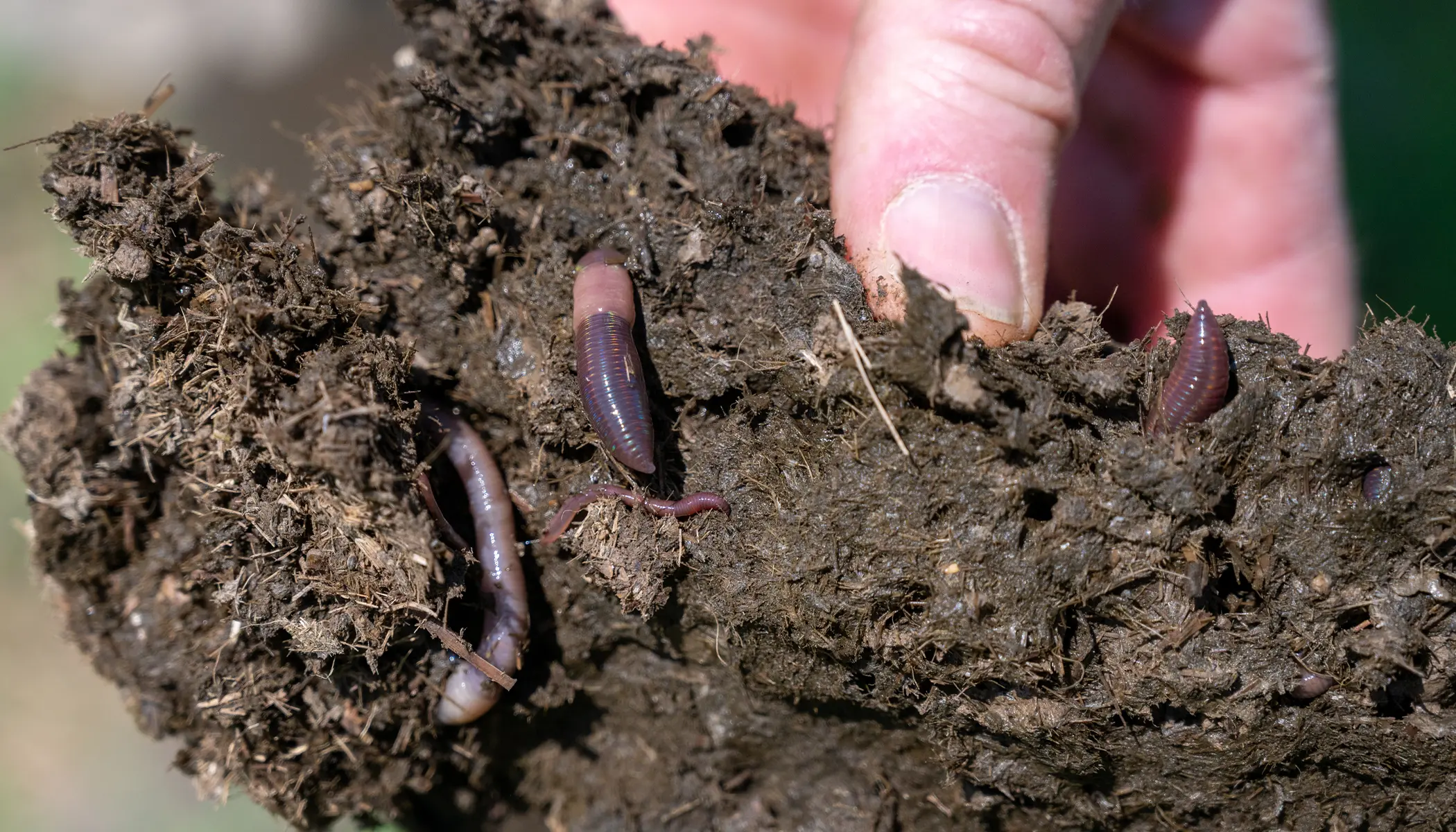
PICTURED ABOVE: Earthworms thrive in the rich soil at Smith Family Farms in Dubuque County, a visible sign of the farm’s no-till and cover crop system building long-term soil health and improving water infiltration. PHOTO / CONRAD SCHMIDT
The role of cover crops and crop residue
To complement the no-till approach, Smith has integrated cover crops for decades. Using a variety of species — including rye, Sudangrass, clover and camelina — he ensures live roots are in the ground nearly year-round. The cover helps keep the soil cool in the summer, increases microbial activity and holds nutrients that could otherwise leach into the environment.
These crops do more than protect soil; they provide critical spring and fall grazing, allowing permanent pastures to rest and recover.
“Returning cattle to the landscape is that model — let her feed herself, haul her own manure and put her on the landscape instead of locking her up in a building,” Smith said.
The family runs approximately 425 Red Angus/Charolais cows. They calve about two-thirds of the herd in the spring and one-third in the fall.
The cattle spend the winter grazing cornstalks, managing crop residue without the need for fuel-intensive tillage. Combined with grazing cover crops, Smith said his fields are a natural fit for cattle.
“They turn forages, inedible to humans, into high-quality protein that consumers desire,” he said.
The farm uses rotational grazing, with 14 subdivided paddocks on one 140-acre parcel alone. This system allowed 78 pairs to graze through summer of 2024 without a single day of supplemental feeding, even during dry conditions.
By moving cattle before rain events and ensuring a two-month rest period for paddocks, Smith protects the integrity of his streams and reduces the need for expensive inputs.
Looking forward to the seventh generation
Smith describes his farming style as regenerative agriculture because the term implies actively making the land better than it was found. This mind-set is rooted in family history, dating to his great-great-grandfather, who emigrated from Ireland in 1853.
Today, the sixth generation is already at work. Jack’s wife, Maria, and their son, Ted, manage calving and cow care, while son Nick handles crops and inputs.
“I guess it just comes naturally for me,” Ted Smith said of working on the farm. “I’ve always loved working with livestock. We spend a lot of time with them in the elements. It’s fun to get your butt kicked by the weather and know we’re in it together.”
Both Jack and Ted said they hope Iowa farming continues to be built around family-owned farms in the future and encourage lawmakers to find solutions to ease the path for new farmers.
“It’s important to me that our labor is only family,” Ted said. “I don’t want to grow too big to where we need outside help.”
Jack added, “If one of our grandkids came back, I think we’d consider adding more cows. But we’re kind of about where we need to be as far as labor and still have quality of life.”
Want more news on this topic? Farm Bureau members may subscribe for a free email news service, featuring the farm and rural topics that interest them most!