Local Rainfall Variability
Author
Published
7/1/2026
Iowa Spring Precipitation
Rainfall is one of the most important factors influencing crop development during the growing season, affecting soil moisture, plant growth, and ultimately yield potential. While statewide precipitation totals provide a broader overview of weather conditions, the timing and geographic distribution of rainfall often have a greater impact on crop production. Precipitation across Iowa during the first three months of the 2026 growing season has varied considerably by region, with rainfall totals ranging from approximately 6 inches to more than 28 inches. Below, Figure 1 highlights a pronounced northwest-to-southeast gradient, with the driest conditions concentrated in western and northwestern Iowa and the wettest conditions occurring across southern and eastern portions of the state.
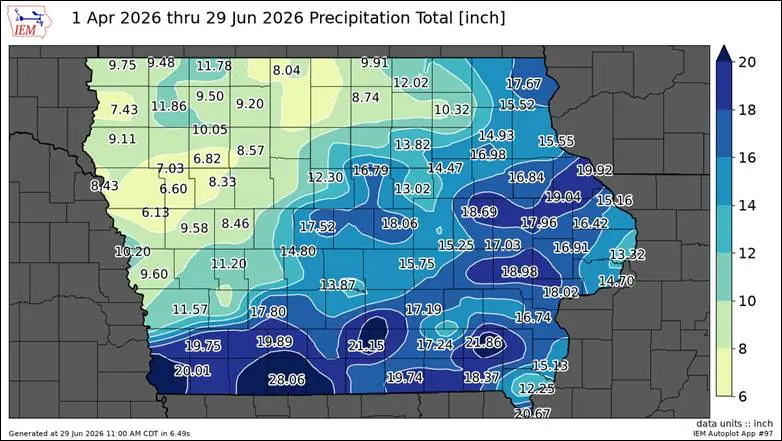
Figure 1. Iowa Environmental Mesonet- Precipitation Total April-June 2026
Northwestern Iowa has generally received between 6 and 10 inches of precipitation since April 1, with several locations reporting less than 7 inches. In contrast, central Iowa has accumulated roughly 12 to 18 inches of rainfall, while much of eastern Iowa has received between 15 and 20 inches. The greatest precipitation totals have been observed across south-central and southwestern Iowa, where localized areas have exceeded 20 inches and one area has accumulated more than 28 inches during the period.
The nearly 20-inch difference between the driest and wettest parts of the state underscores the localized nature of precipitation this growing season. Although statewide precipitation totals can suggest generally favorable moisture conditions, Figure 1 illustrates that weather conditions have varied substantially across Iowa. As a result, crop development, soil moisture availability, and yield potential are likely to differ by region as the 2026 growing season continues.
Drought Monitor
The U.S. Drought Monitor indicates that most of Iowa entered late June free of drought conditions, although portions of western and northern Iowa continued to experience abnormally dry conditions and moderate drought. As of June 23, approximately 67.0% of the state was classified as having no drought, while 33.0% was designated as abnormally dry (D0) or experiencing moderate drought (D1). No areas of Iowa were classified in severe (D2), extreme (D3), or exceptional (D4) drought (Figure 2).
Moderate drought (D1) was confined primarily to portions of north-central Iowa, while abnormally dry conditions (D0) extended across much of western Iowa and into parts of northern Iowa. These areas correspond with regions that have received the lowest precipitation totals since early April, reinforcing the relationship between below-average rainfall and declining soil moisture conditions.
Drought conditions have improved considerably over the past three months. In late March, more than half of Iowa (53.9%) was classified as abnormally dry, and 38.3% of the state was experiencing moderate drought. By late June, the share of Iowa in moderate drought declined to 8.3%, reflecting substantial improvements following spring rainfall across much of the state. As corn and soybeans enter key stages, timely rainfall will remain particularly important in drier regions to maintain favorable crop conditions and yield potential.
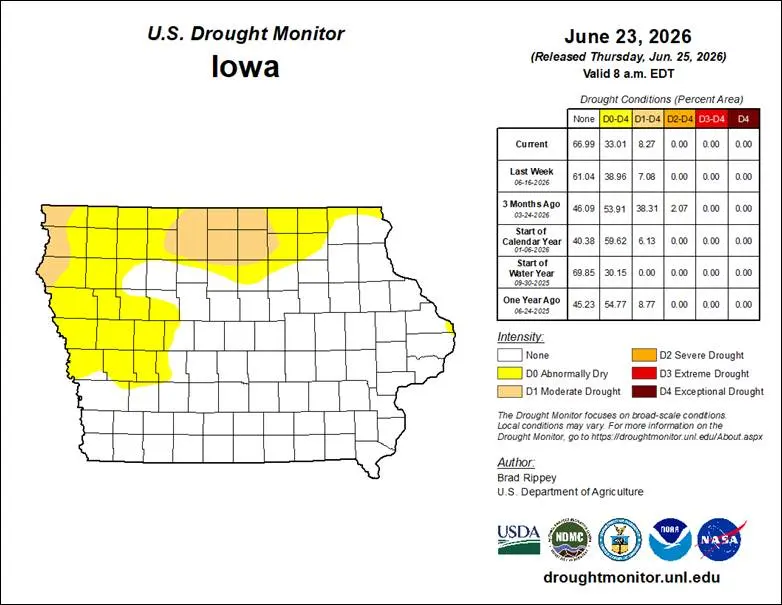
Figure 2. Iowa Drought Monitor
Topsoil Moisture Condition
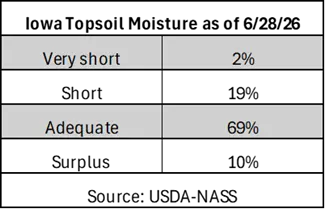
Recent precipitation has contributed to generally favorable topsoil moisture conditions across Iowa entering the latter part of June. According to the USDA National Agricultural Statistics Service (NASS), 79% of the state's topsoil moisture was rated adequate or surplus for the week ending June 28, while 21% was classified as short or very short (Table 1).
Specifically, 69% of Iowa's topsoil moisture was rated adequate and an additional 10% was rated surplus, indicating that much of the state has sufficient moisture to support crop development. Meanwhile, 19% of topsoil was rated short and only 2% was considered very short, with the driest conditions generally corresponding to areas of western and northwestern Iowa that have received below-average precipitation during the growing season.
Table 1. Iowa Topsoil Moisture for the Week Ending 6/28/2026
These moisture ratings align closely with both the cumulative precipitation totals and the U.S. Drought Monitor. Southern and eastern Iowa have benefited from frequent rainfall, helping maintain favorable soil moisture conditions, while parts of western Iowa continue to experience localized moisture deficits. As corn enters the critical pollination period and soybeans continue vegetative growth, maintaining adequate topsoil moisture will be important for sustaining crop development and protecting yield potential.
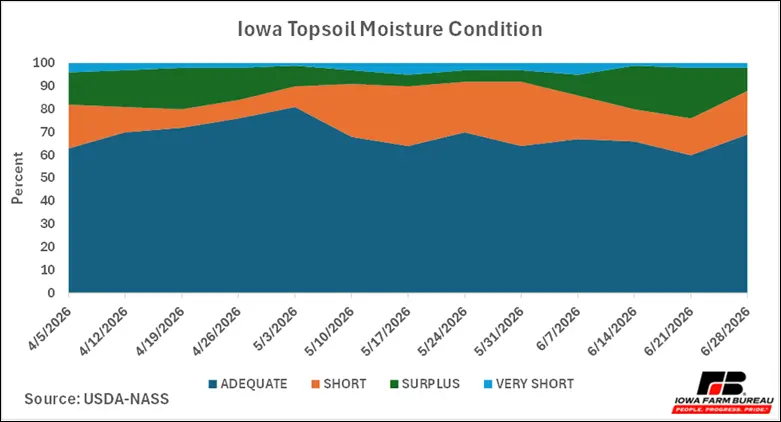
Figure 3. Iowa Topsoil Moisture Condition April-June 2026
Iowa's topsoil moisture conditions fluctuated throughout the spring and early summer as precipitation patterns shifted across the state. At the beginning of April, 77% of the state's topsoil was rated adequate or surplus, while 23% was rated short or very short. Frequent rainfall during April steadily improved soil moisture, with adequate or surplus conditions reaching 90% by the week ending May 3 (Figure 3).
Drier weather during May temporarily reduced soil moisture levels. By the end of the month, only 69% of topsoil was rated adequate or surplus, while the share of topsoil rated short or very short increased to 31%, reflecting limited rainfall across portions of the state.
Rainfall during June helped replenish soil moisture. Surplus topsoil moisture increased from 5% at the end of May to 22% by the week ending June 21, indicating that many areas received not only sufficient precipitation to restore soil moisture reserves, but in some cases excess moisture that resulted in severe ponding or flooding of low-lying areas. As previously stated, surplus moisture declined slightly during the final week of June, but 79% of Iowa's topsoil remained in adequate or surplus condition, while only 21% was rated short or very short.
Want more news on this topic? Farm Bureau members may subscribe for a free email news service, featuring the farm and rural topics that interest them most!