Iowa's status as a farm and agriculture powerhouse is known worldwide. See why!
1. Iowa Agriculture: A National Leader
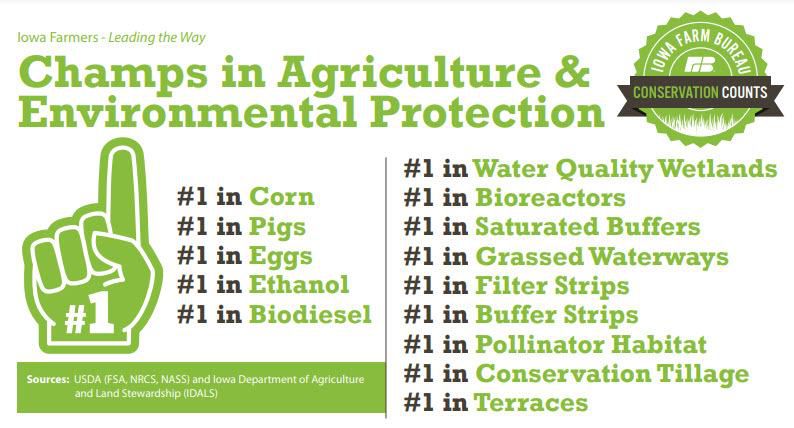
Iowa’s farms rank #1 nationally, producing more corn, pigs, eggs, ethanol and biodiesel than any other state in the country. As a result, Iowa farmers provide our food, animal feed and energy, along with the ingredients used in many of our household products.
Iowa farmers also lead the nation in several conservation practices that protect our rivers, lakes and streams, ranking #1 nationally in acres protected by water quality wetlands, bioreactors, saturated buffers, grassed waterways, filter strips, buffer strips, pollinator habitat, conservation tillage and terraces.
And, according to the most recent U.S. Census of Agriculture (2022), Iowa ranks #2 nationally in cover crops. Iowa’s farmers use cover crops to hold soil in place and reduce nitrate loss by up to 30%. In recent years, Iowa farmers have more than doubled cover crop use, from 1.6 million acres in 2017 to 3.4 million in 2025.
Additionally, Iowa farmers rank #2 nationally in soybean production, #4 in cattle on feed, #7 in turkeys, #9 in sheep and lambs, and #10 in milk production.
2. 2% of the U.S. Population Feeds All of Us Sustainably
Farm and ranch families make up less than 2% of the U.S. population.
Thanks to innovation, technology and diverse farms, one U.S. farm feeds (on average) 183 people annually, in the U.S. and abroad. That’s an increase of nearly 70% since 1980.
While feeding more people, U.S. farmers are shrinking their environmental footprint. Since 1990, U.S. farmers have cut GHG emissions per meal provided by 25%.
3. Iowa's Family Farm Legacy
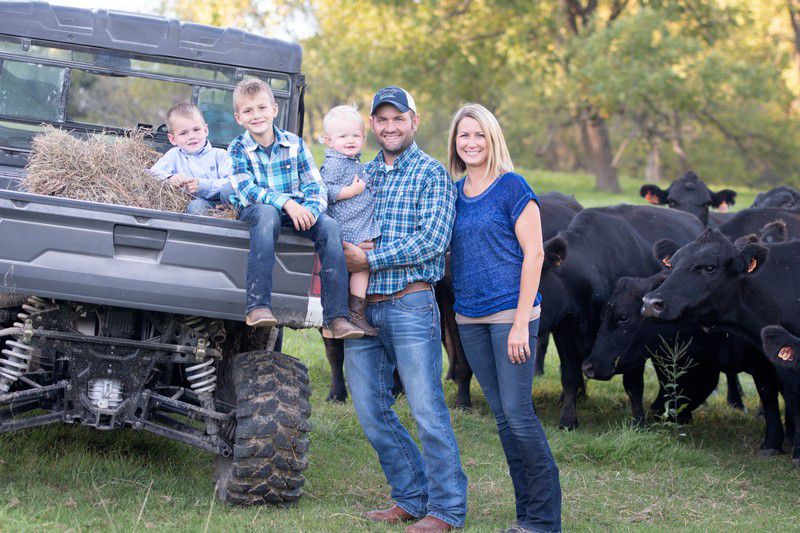
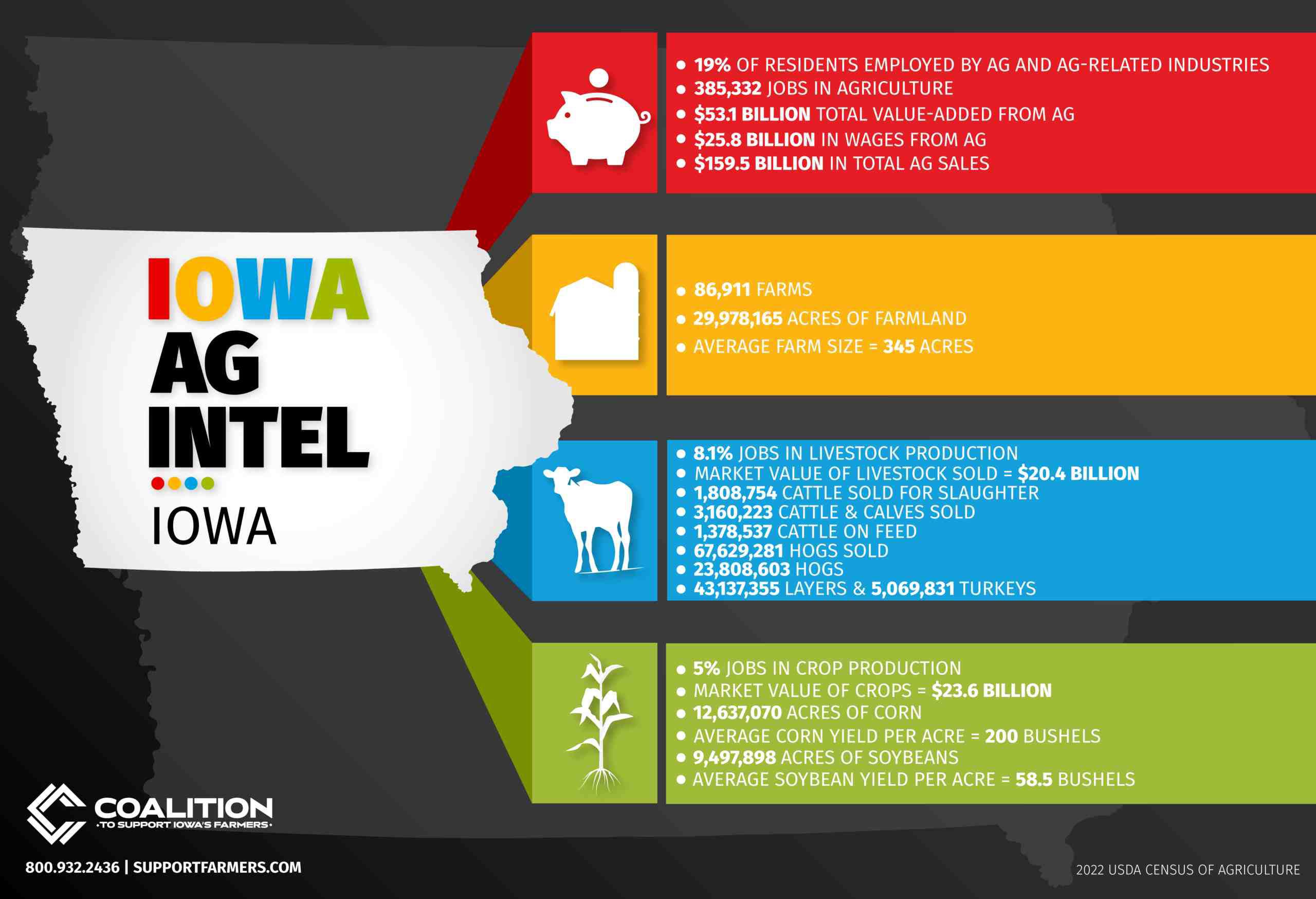
According to the most recent U.S. Census of Agriculture, Iowa has 86,911 farms and 157,531 farmers (an increase of more than 12,000 farmers from five years prior and 30,000 more than 20 years ago).
- More than 96% of Iowa's farms are family farms. (Nearly 82% are operated by families or individuals, and another nearly 15% are organized as partnerships or family corporations.)
- 33% of Iowa farmers are women.
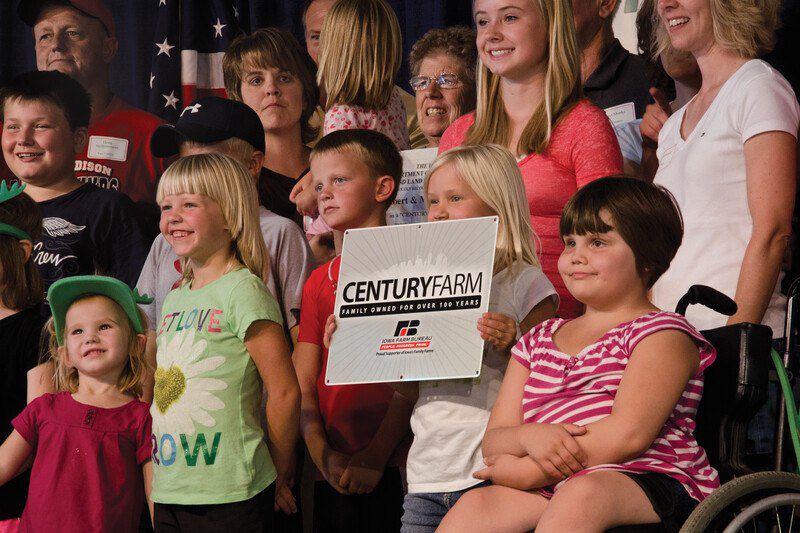
Iowa’s family farm legacy spans generations! Since Iowa Farm Bureau and the Iowa Department of Agriculture and Land Stewardship began honoring Iowa families who have owned their farms for more than 100 years (in 1976), more than 21,000 Iowa farms have received Century Farm designations (for farms owned by the same family for at least 100 years) and more than 2,400 farms have received Heritage Farm designations (for farms owned by the same family for at least 150 years).
4. Agriculture Employs Iowans
According to data from the Coalition to Support Iowa's Farmers' 2024 Iowa Agriculture Economic Contribution Study, one in five Iowans (19%) have jobs because of agriculture – totaling 385,332 jobs. 44% of those jobs result from animal agriculture/livestock farming.
Agriculture also contributes $159.5 billion to Iowa's economy (accounting for one-third of Iowa's total economic output), up 32% from five years ago!
To see agriculture’s impact on your local economy, visit the Coalition to Support Iowa’s Farmers’ Iowa Ag Intel site.
5. Doubling Down on Environmental Responsibility
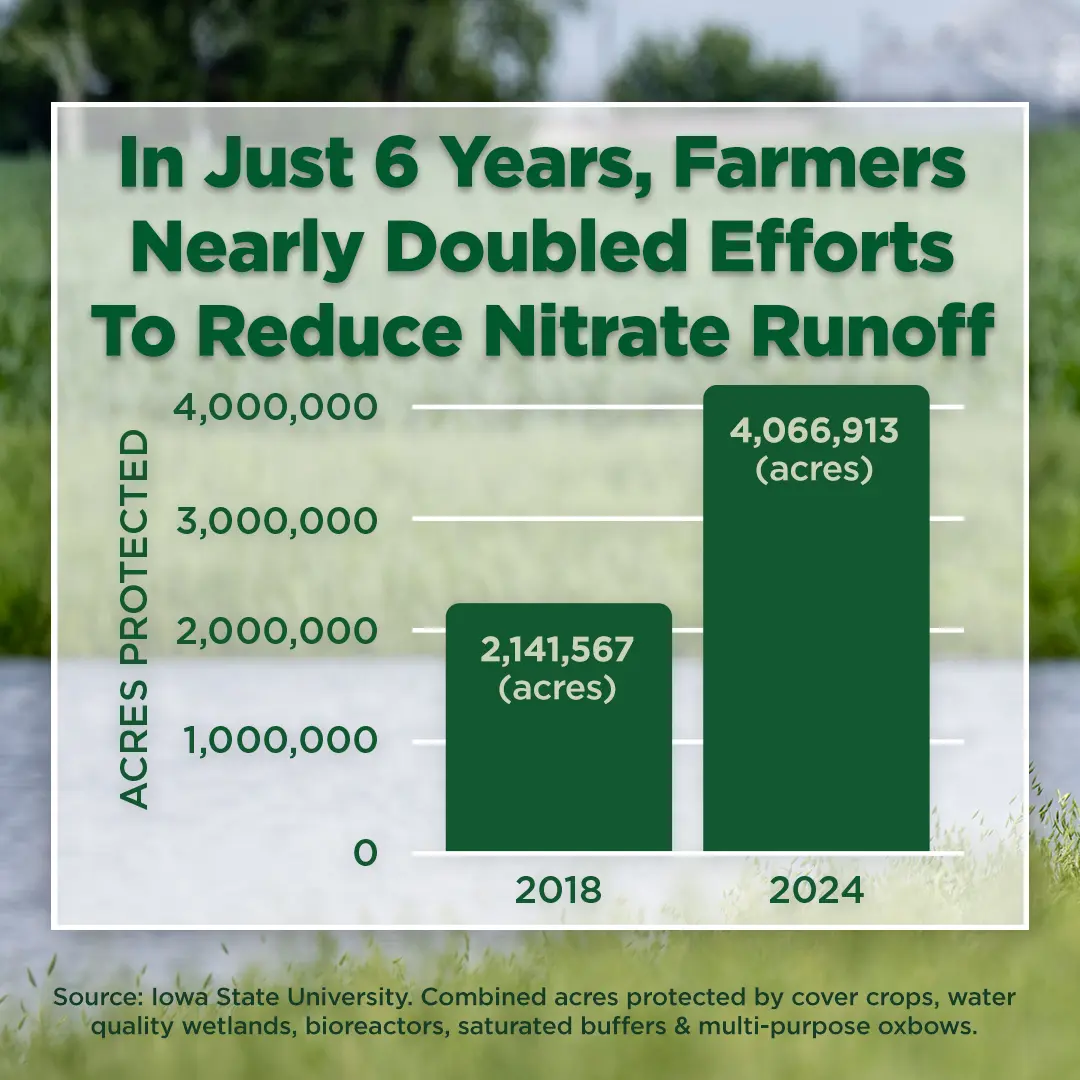
In just 6 years, Iowa farmers have nearly doubled the acres protected by 5 key conservation practices that prevent nitrates from reaching waterways.
Between 2018 and 2024, Iowa farmers increased the acres protected by 5 conservation practices by 90%, expanding acres protected by cover crops, water quality wetlands, bioreactors, saturated buffers and multi-purpose oxbows from 2.1 million to more than 4 million.
Science from Iowa State University shows these practices are proven to hold soil in place and prevent runoff, with cover crops reducing nitrate loss by up to 30%, multi-purpose oxbows reducing nitrate loss by more than 40%, saturated buffers and bioreactors reducing nitrate loss by nearly 50% and wetlands filtering up to 90% of nitrate runoff from fields.
This progress has been led by ongoing collaboration between farmers and other stakeholders. According to the Iowa Department of Agriculture and Land Stewardship, farmers are working with more than 450 public and private partners across Iowa to protect our natural resources.
To learn more about conservation gains and Iowa farmers’ work to protect water quality, visit ConservationCountsIowa.com.
6. Helping Swans and Monarchs Make a Comeback
We love a comeback story!
According to the Iowa DNR, Iowa was home to a record 158 nesting pairs of trumpeter swans in 2025, up 17% from 2022. Wildlife experts say more wetland habitat on farms and cleaner water are helping trumpeter swans and other aquatic birds, such as bald eagles and cranes, thrive in Iowa.
Farmers are also helping lead the creation of habitat for monarch butterflies and other pollinators. According to Iowa State University, Iowa’s monarch habitat grew more than 10x in just 5 years (from 65,900 acres in 2017 to 691,100 acres in 2022), and 73% of that habitat is on Iowa farmland.
7. Sustainable Livestock Farms
U.S. livestock farmers are providing more with less of an environmental impact – improving farm sustainability. Since 1990:
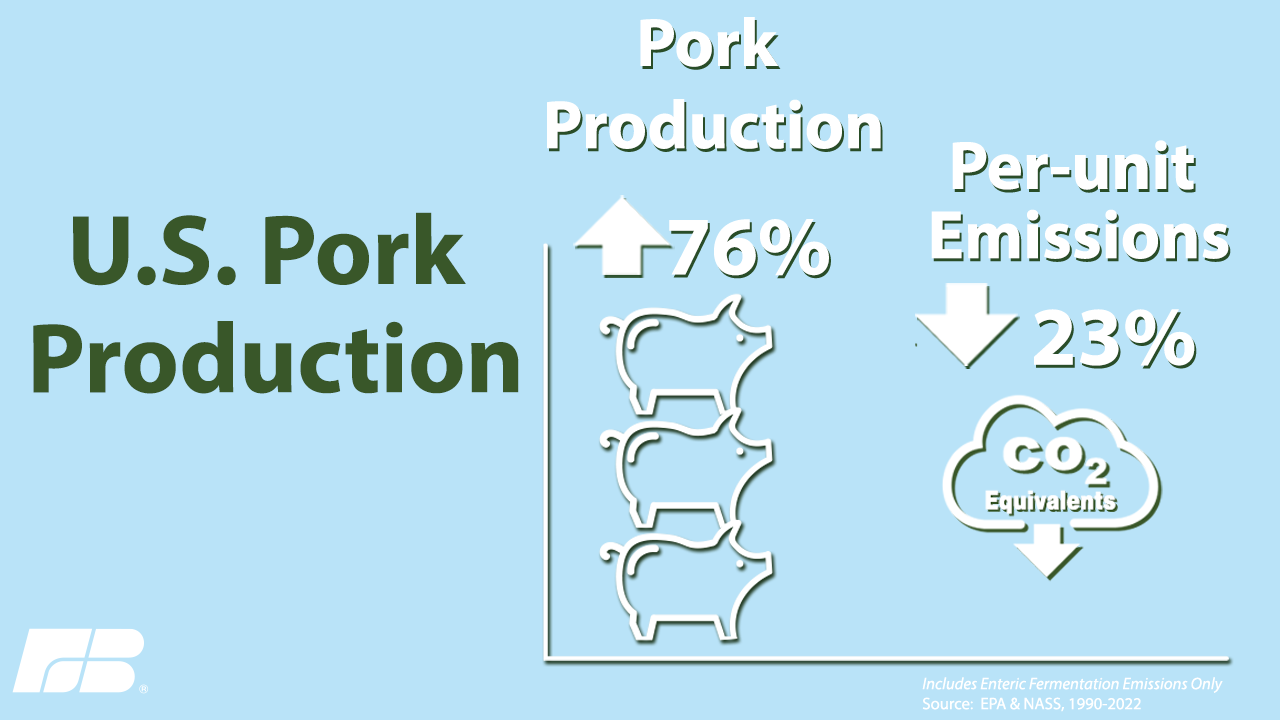
- U.S. farmers have grown pork production by 76%, while reducing greenhouse gas (GHG) emissions per pound of pork by 23%.
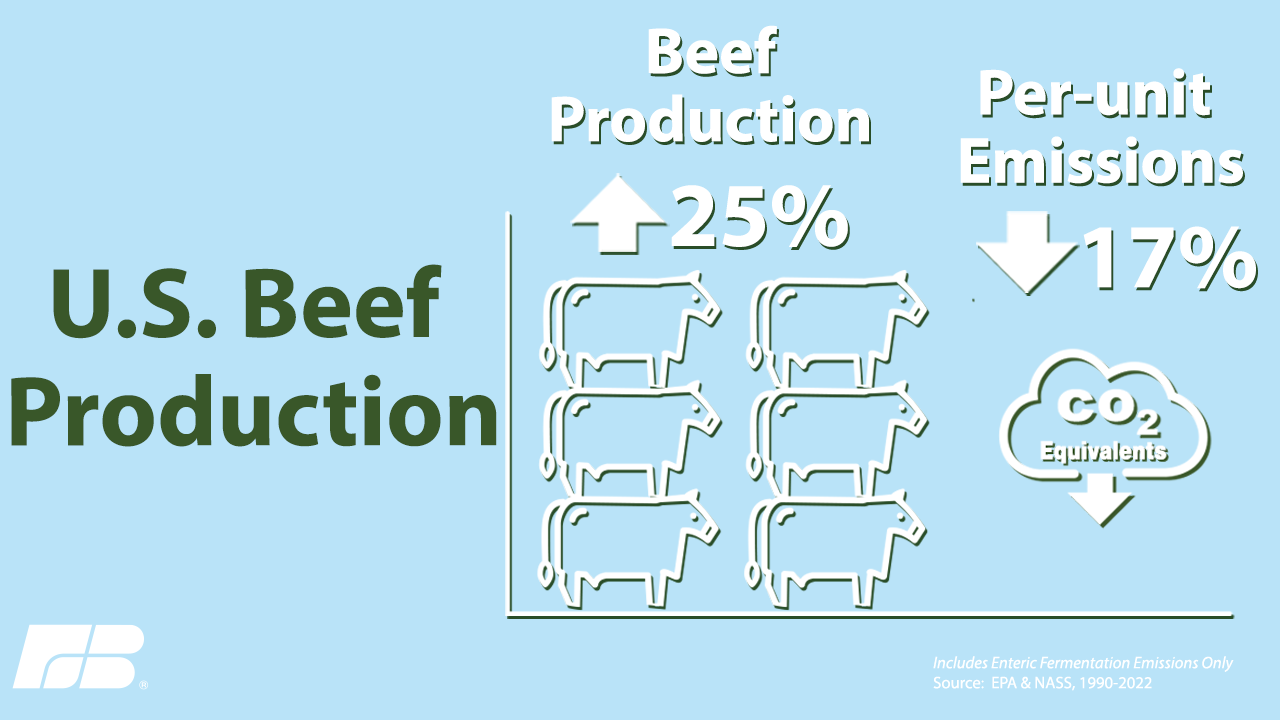
- U.S. farmers have grown beef production by 25%, while reducing GHG emissions per pound of beef by 17%.
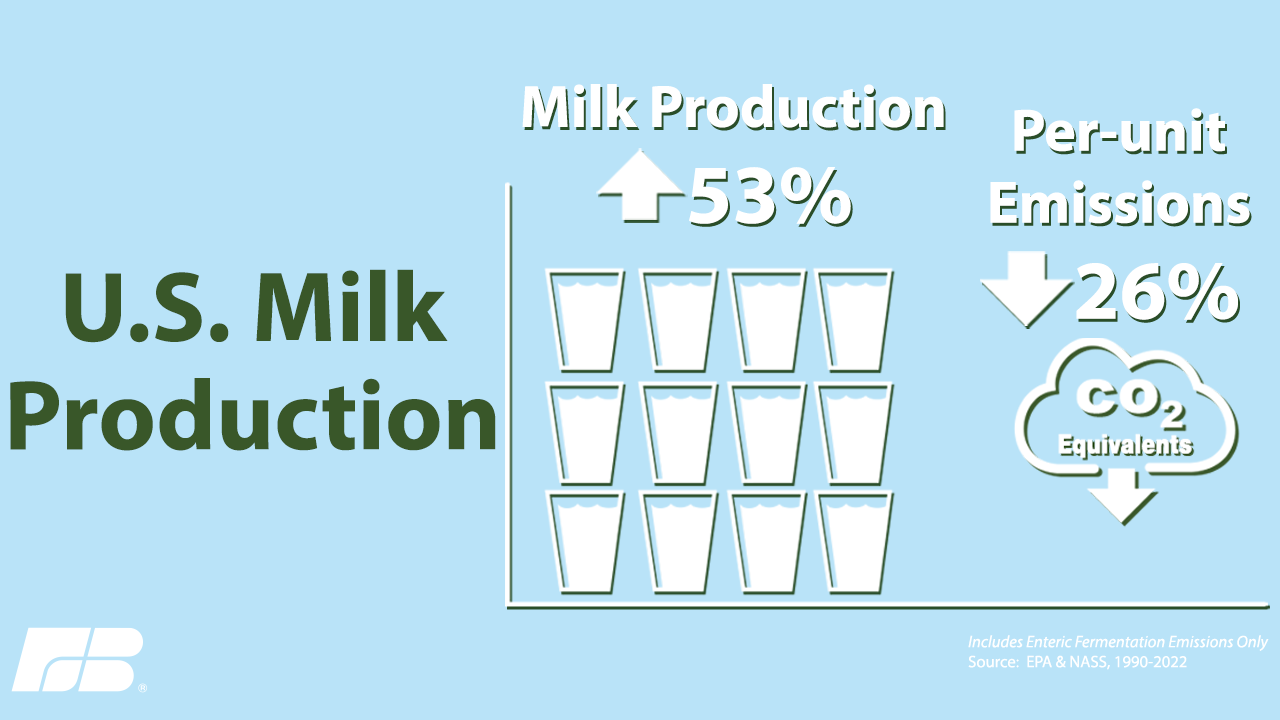
- U.S. farmers have grown milk production by 53%, while reducing GHG emissions per gallon of milk by 26%.
Additionally, cattle play an important role in farm sustainability. Cattle have a unique ruminant digestive system that enables them to consume plant material that is inedible to humans – such as grasses, corn stalks, cottonseed hulls, ethanol byproducts and more. Their ability to “upcycle” these byproducts and graze land that isn’t suitable for other purposes (like growing crops) reduces waste and protects environmentally sensitive land.
8. Ethanol and Renewable Energy
Iowa ranks #1 nationally in ethanol and biodiesel, producing more than any other state in the country.
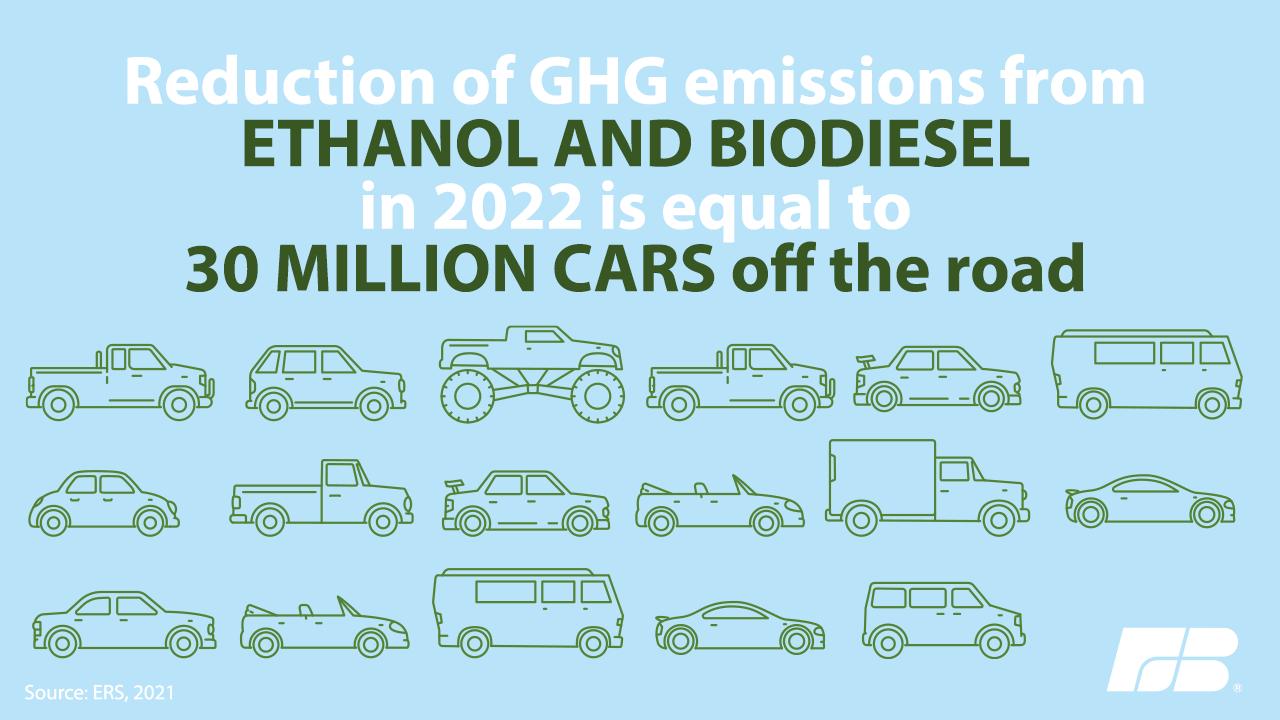
In 2022, the use of ethanol and biodiesel reduced GHG emissions by an amount equivalent to taking 30 million cars off the road.
9. Locally Grown
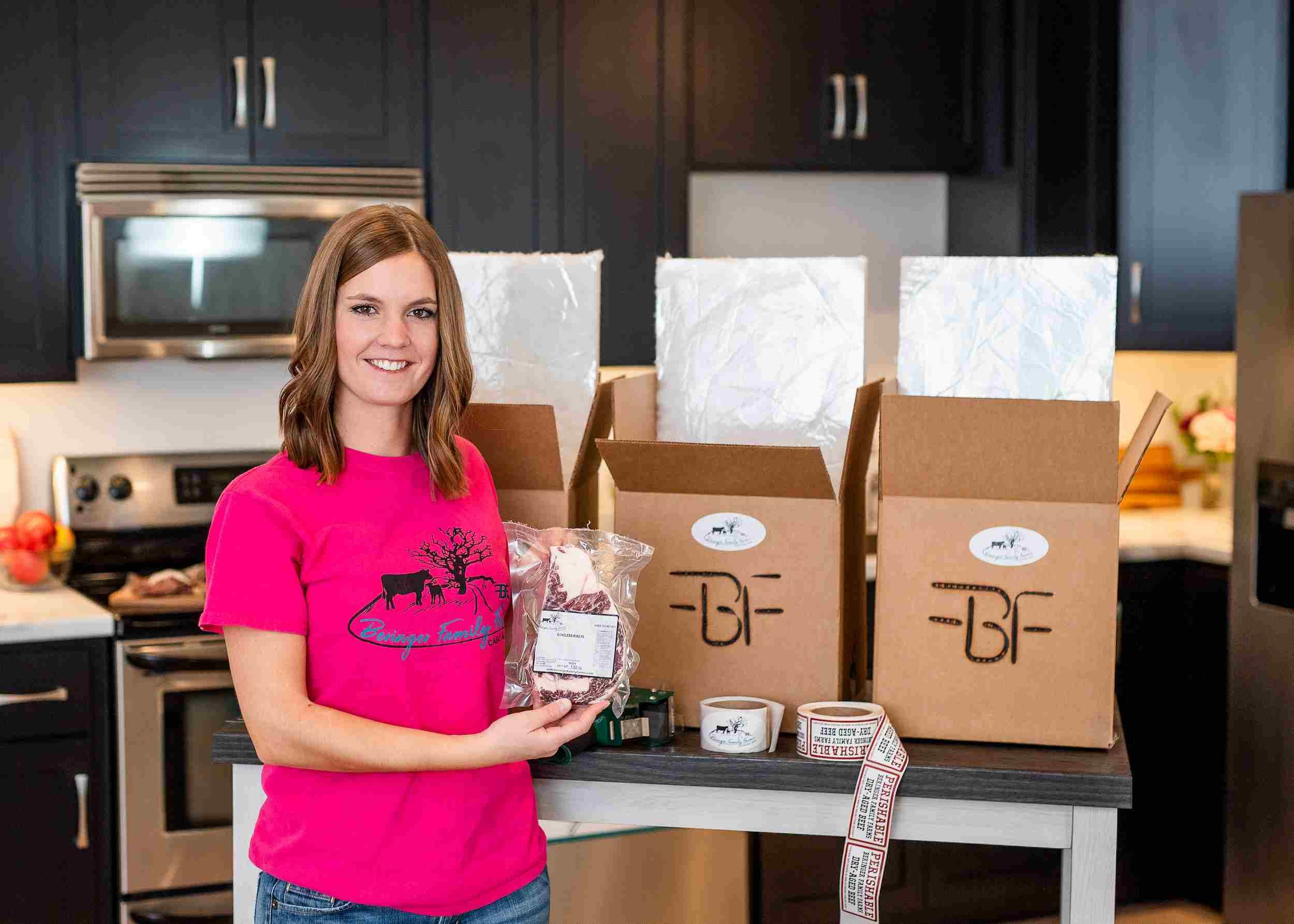
When making food purchases, 35% of Iowa grocery shoppers are looking for a “locally grown" label, and Iowa’s farmers are stepping up to meet that need!
In 2022, 2,427 Iowa farms sold agricultural products directly to consumers. The value of those sales increased by 51%, compared to 2017.
10. Iowa's Diverse Farms
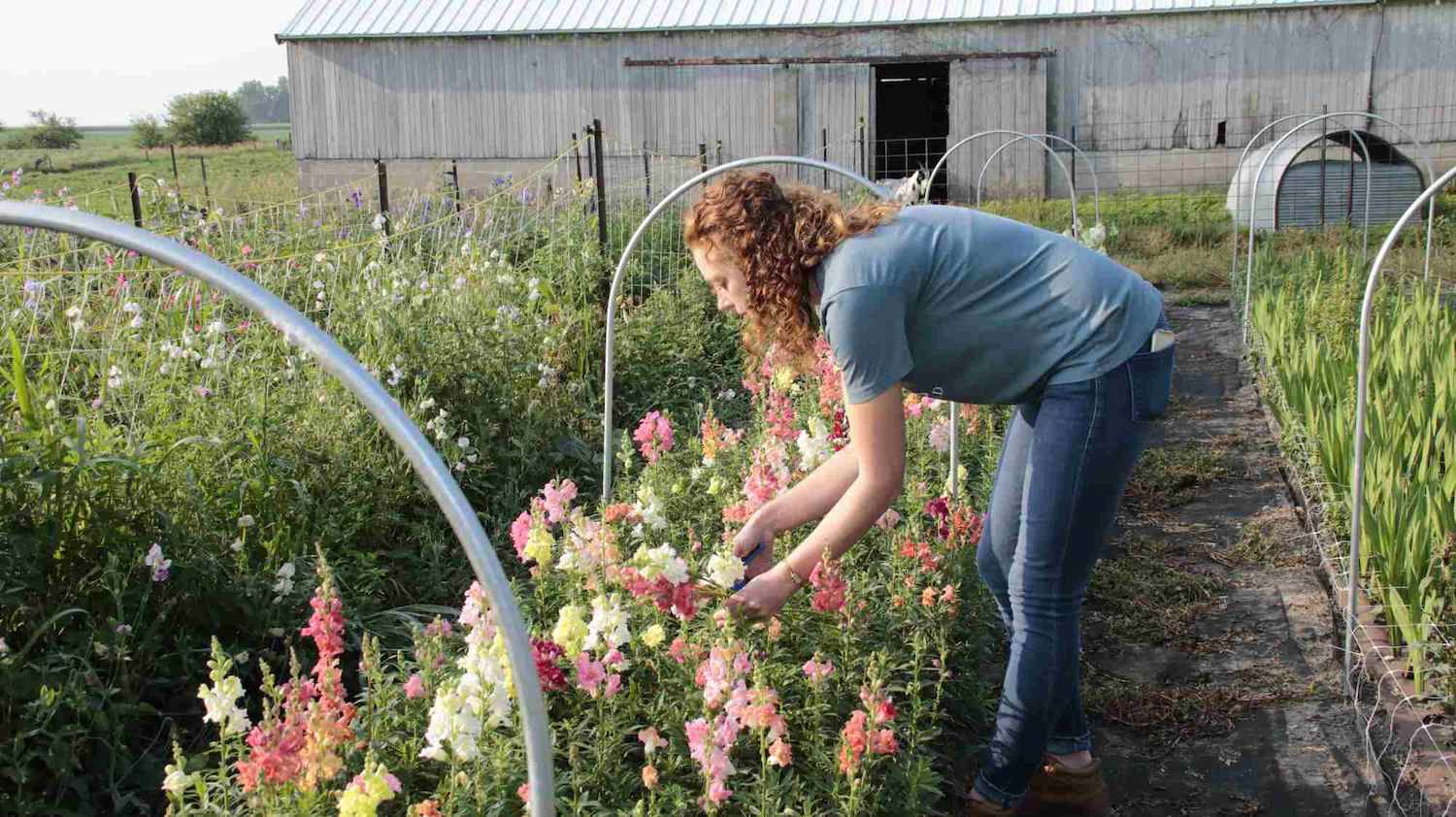
Yes, Iowa’s farms lead the nation in corn, pigs and eggs, but there’s so much more! Look around and you’ll see that Iowa's farmers are growing and raising everything from flowers and mushrooms to goats and Scottish Highland cattle!
Some 200 farmers markets in Iowa provide shoppers with fresh, locally-grown produce and a variety of other products, ranging from eggs and meat to wine and cheese.
Iowa is also home to 250 commercial vineyards and more than 100 licensed wineries.
Learn more about farming and your food!
- The Farm Fresh Blog introduces you to the people who provide your food, fuel and fiber and the issues they face.
- The Iowa Dish is an e-newsletter that will spark your curiosity about how our food is grown and raised.
- See how farmers embrace science and technology to protect our land and water at ConservationCountsIowa.com.
- Learn about the care livestock farmers take to ensure the health and comfort of their animals at IowaAnimalFarmCare.org.
- See how farmers provide us with meat, milk and eggs that meet our nutritional needs, while using sustainable practices and caring for their animals at RealFarmersRealFoodRealMeat.com.
- Learn how the Iowa Agriculture Literacy Foundation is teaching students about the significance of farming and agriculture - in their lives and around the world.
Learn more about Iowa Farm Bureau - agriculture's champion and defender
- Learn how Iowa Farm Bureau is working for the people, progress, and pride of Iowa. See how we've been doing it for more than 100 years!
- Find answers to your frequently asked questions.
- Discover the many exclusive benefits of an Iowa Farm Bureau membership!