From the waterpark to the farm: Why safe water matters
Author
Published
8/12/2026
I don’t think I’ve ever appreciated ice water more than I do this hot, humid summer. As I sit down to write this, I’m sipping from a giant water bottle next to my keyboard.
In July, my family visited Adventureland amusement park in Altoona. I planned the trip in advance, but I ended up picking the hottest day in the Des Moines area in nearly two years. Temperatures climbed to 98 degrees Fahrenheit with a heat index of 104 degrees.
As a constant worrier, I became fixated on water and making sure everyone in my family stayed well hydrated.
At the entrance gate, I asked for directions to the nearest drinking fountain. I ordered cups and cups of ice at the concession stands.
We ended up spending four hours in the park’s lazy river, trying to stay cool, until I couldn’t stand wearing my wet swimsuit anymore.
The sweltering trip reminded me how much we depend on safe water every day, whether we’re drinking it, swimming in it or using it at home.
Iowa farmers also understand the importance of safe water. After all, their families drink the same water as the rest of us, and they, too, enjoy trips to the waterpark on a hot day.
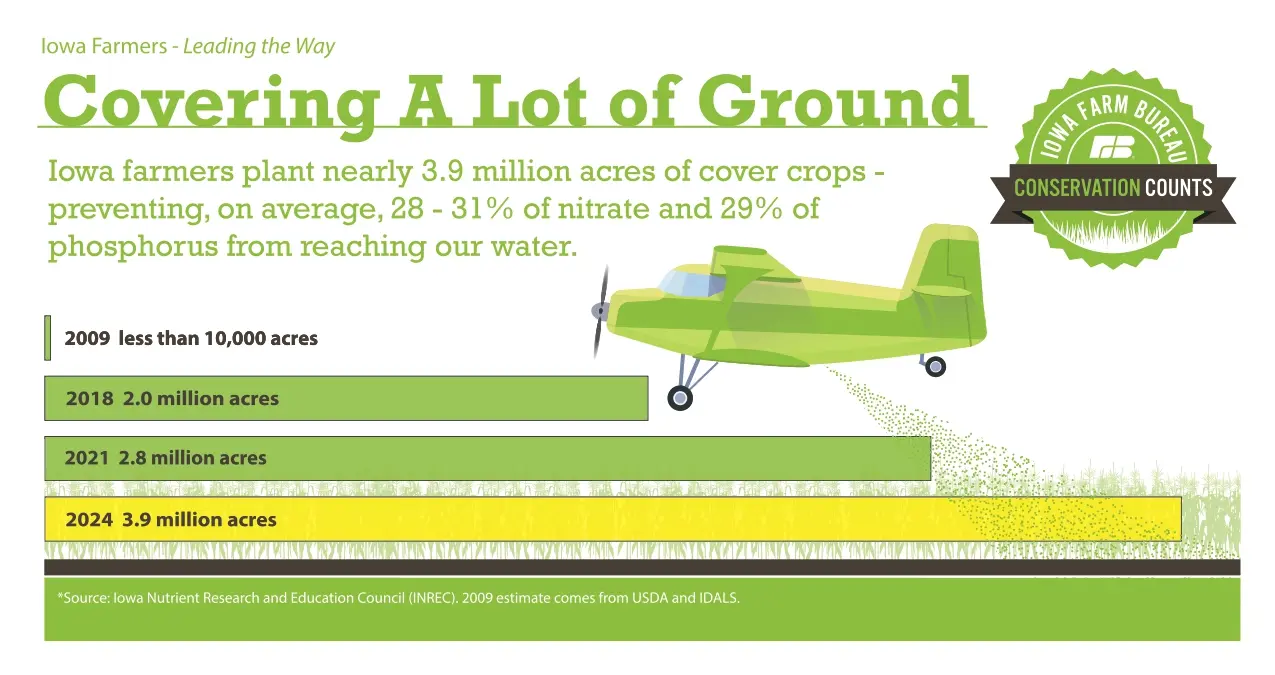
That’s why Iowa farm families are taking action. For example, many farmers will plant cover crops, such as rye and oats, this fall to protect the soil and water after corn and soybean harvest.
Cover crops act like a blanket over the field, helping to hold soil in place, reduce runoff and improve soil health for the next crop.
By keeping living roots in the ground after harvest, cover crops also help prevent soil and nutrients from reaching Iowa’s streams and rivers.
In 2024 alone, Iowa farmers planted nearly 3.9 million acres of cover crops, up 92% from the previous six years.
And you can expect to see more cover crops this fall thanks to new water quality funding approved by the Iowa Legislature.
The program’s goal is to double the number of cover crop acres planted in the Des Moines River Watershed, which includes 22 counties in northern and central Iowa.
Of course, there’s more work to do. As communities grow and businesses thrive, water use increases. Continued investment in upgraded treatment plants, improved stormwater management and the latest technology on farms and in city infrastructure is essential to safeguard water quality for future generations.
As a mom, I appreciate the work of farmers, city leaders and many others to help ensure our water is safe to drink and enjoy.
I’m also grateful for waterparks, ice machines and the Adventureland staff for making our family vacation so much fun despite the extremely unfun weather.
If you’re curious about what cover crops and other conservation practices look like on an Iowa farm, visit ConservationCountsIowa.com. You can watch farm tours and see how farmers are working to reduce runoff, protect soil and improve water quality.
Learn more about author Teresa Bjork here.
Want more news on this topic? Farm Bureau members may subscribe for a free email news service, featuring the farm and rural topics that interest them most!